Strobing (or pulsing) an LED light helps freeze images of fast-moving objects. From an imaging standpoint, LED strobe offers several benefits, but doing so also causes unintended environment hazards to nearby personnel, as these flashing lights can be disorienting and cause issues for employees. A new hardware feature, however, can minimize the negative impacts of strobing LEDs.
Hidden Strobe Through Internal Self-Triggering
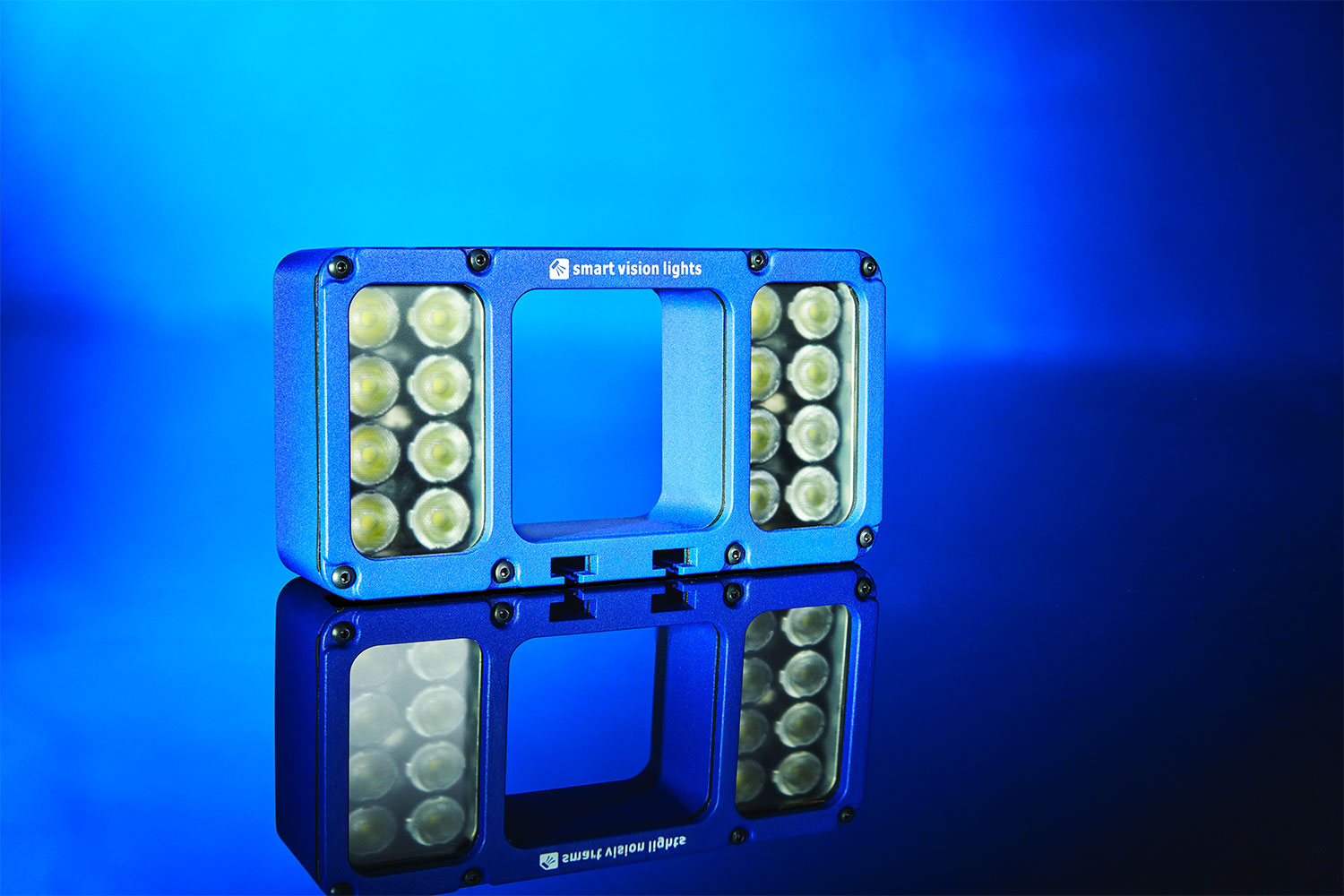
LED lights equipped with the new Hidden Strobe feature internally self-trigger thousands of times per second. The short-triggered pulses occur continuously and follow the duty cycle of the individual light upon which the feature is implemented. Since the human eye perceives light that flashes faster than 60 to 100 times per second as continuous, this feature allows human operators working near the system to see the light as continuous. When the light is triggered in sync with the camera to capture an image, the Hidden Strobe pulses stop and the programming pulse for the camera is executed. After image capture, the light returns to continuously generated Hidden Strobe pulses to deliver a „continuously on“ appearance to anyone nearby. Traditional overdrive pulses intended for camera exposure can have a separate duration than the faster Hidden Strobe pulses in the background. Nearby personnel will only notice a slight flicker as the light switches between camera exposure pulse and the Hidden Strobe pulses in the background. This flicker is barely noticeable when compared to the same exposure pulse that would be used in standard strobed operation. Hidden Strobe feature minimizes the physical impacts on personnel and allows companies of all types to maximize the effectiveness of their machine vision lights without having to shield the light itself. Available lights that offer the new feature include Smart Vision Lights‘ Lightgistics series lights, which feature dual overdrive technology – delivering ten times the brightness of continuous lighting.