How did your company come to be founded, and what do you aim to achieve with it?
It was born out of years of frustration with the commissioning of CSI-2 and V4L2 cameras on embedded Linux systems. Until now, there has been no tool that supports image processing engineers in testing, configuring, and evaluating cameras in a headless environment – as simply and straightforwardly as they would on a desktop PC. Instead, teams resort to building makeshift scripts or repurposing expensive industrial software suites. With the advent of AI-assisted software development, I was finally able to tackle this problem myself and build Videre – the very tool I had been wishing for years.
What questions do your products answer?
Videre answers the fundamental question that lies at the beginning of every embedded vision project: Does this specific camera or sensor module – paired with the appropriate optics and lighting – work for my application, and how can I get the absolute best performance out of it? Through a web-browser interface, users can live-stream, analyze, and control cameras on Nvidia Jetson Orin, Raspberry Pi 5, and x86 systems – all without needing a monitor connected to the board or having to write custom scripts. Furthermore, multi-camera systems can be evaluated, aligned, and controlled from within a single application. An open camera API is currently under development to enable the creation of custom applications built upon this platform.
What makes your company unique?
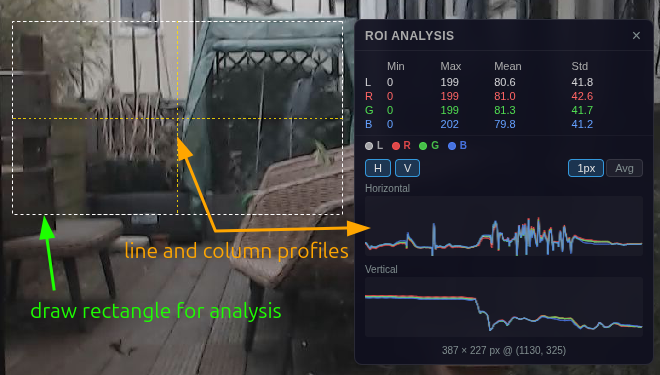
Videre combines deep insight into the specific quirks and characteristics of embedded platforms with the analytical depth typically found in industrial machine vision systems. Rather than simply displaying a raw image – as basic, free V4L2 viewers do – or imposing high licensing costs like traditional vision suites, Videre delivers live streaming capabilities, histogram and ROI analysis, a configurable OpenCV pipeline, as well as hardware and performance diagnostics. The exact same codebase runs across Jetson, Raspberry Pi, and x86 Linux platforms, allowing teams to evaluate cameras on the very same hardware that will ultimately be shipped to end customers.