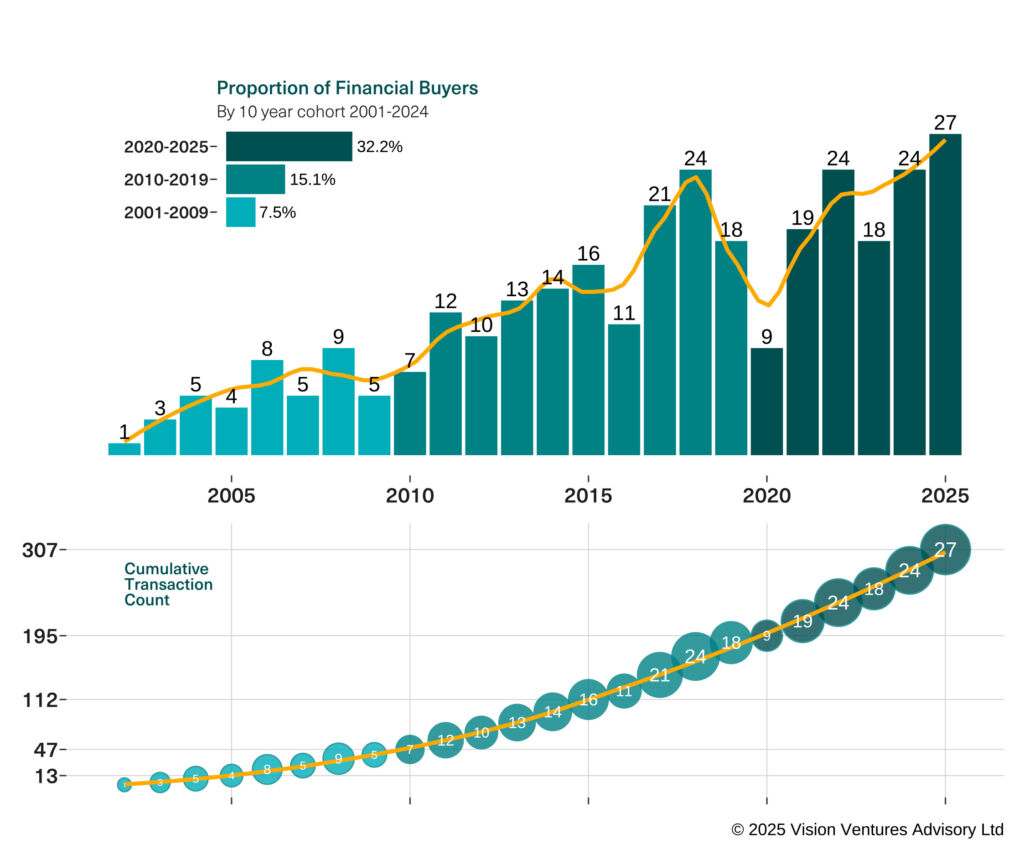
Vision Ventures has specialised for many years in M&A transactions in the vision tech market, but what do you see as the best way is to sell a vision tech company?
Chris Yates: Firstly, I think it’s important to recognise the overall attractiveness of the vision tech market. Vision tech has a very strong strategic driver – offering fast, non-contact, high-information content data that is extremely valuable in almost every vertical. This is one reason why the sector has shown double-digit growth over the past three decades and why there is contin-ued strong demand for vision companies.
For a company sale, in most cases, it’s best to run a ‚limited auction‘, as part of a man-aged sale process, and secure multiple bids for the company. Competition helps with attractive valuations and the managed process drives all parties towards a successful completion. All buyers receive identical information at the same time and progress together, making the process efficient and avoiding drawn-out discussions that increase risk and drain company resources.
In a structured sale, preparation is critical. The sale strategy is identified, and appealing information materials are created. Once prepared, engagement with a tar-geted group of buyers helps to understand the business and value in the opportunity and enables bidders to submit non-binding offers for purchase. A due diligence process is then completed with selected bidders, before the purchase agreement is negotiated and signed.
It is important to recognise that serial buyers often prefer a managed transaction process, in contrast to an ad-hoc engagement. A professional process ensures sellers are seen as committed to a sale, while the buyer’s own resources can be applied efficiently on the path to completion, reducing their risk and expense.
One point of caution is to avoid engaging with opportunistic inquiries without having a sale strategy, or outside of a structured process. Doing so almost always leaves the seller at a disadvantage and increases the risk of not completing the sale or doing so under unfavourable terms.

Selling a company is typically a one-off event so how do owners find the right buyer?
There are many reasons for a company sale. Owners who have built their business from the ground up often see it as important to find the right new owner to take their legacy forward. Some companies see exciting opportunities in larger markets or geographic regions through partnering with a larger company, while venture-backed companies will sell at some point and generate a return for their investors.
At the same time, the right buyer depends on the desires of the owner and the planned future of the company. Sellers expect to receive an attractive valuation, but also other considerations play an important role in defining the right buyer. Finding the right match, for example in company culture, synergy in strategy, complementary technology, or market access, can also really help the long-term success of the business post-acquisition. One important role of expert M&A advisers is to bring into the process buyers who will strate- gically value the company the most while ensuring the transaction best matches the wishes of the sellers.
Owners should also be aware of differences be-tween advisers and the services they offer. At Vision Ventures we act as sector-specialist full-service provider, managing and executing the entire sale process from strategic planning, creating all necessary sales materials, preparing and conducting the Due Diligence process through to signing and closing. Generalist corporate finance companies operate a similar model, although with less focus and expertise on the vision market or where synergies can be captured.
It is important for company owners to rec-ognise that there are other types of M&A advisers with much different scope of services. Buyers often engage sector experts for due diligence support or to gain insights into specific vision tech fields. Transaction brokers focus on matching buyers and sellers but rarely manage the process or provide services within the execution. All advisers can play a role in a successful sale, but as with any professional en- gagement, it is important to understand the scope of service and ensure it matches your needs.
It is often said that timing is everything, so when is the best time to start a sale process?
Strategic transactions often take around one year or more to complete, and this means it can be difficult to fine time a sale process. In fact, trying too hard to pick the perfect moment for a sale is likely to be futile and can reduce momentum in a sale process. However, in general, a good foundation will be when the company has a credible and attractive forecast, backed by a historical period of growth, and market visibility of the strategic relevance of the company’s products or technology. At the same time, preparation for a sale can, and should, start as early as possible. It is valuable for owners to understand how their company will be viewed from the outside, what valuations are achievable, and if there are weaknesses to be addressed prior to sale, all before engagement with any buyers. This also helps if the decision to sell is trig-gered by a direct approach from a buyer, allowing a smooth transition to an active sale project.













![Die [me] – mechatronik & engineering wird digital](https://cdn.tedo.be/tedo-mu/wp_uploads/sites/10/2026/03/Unbenannt.jpeg)