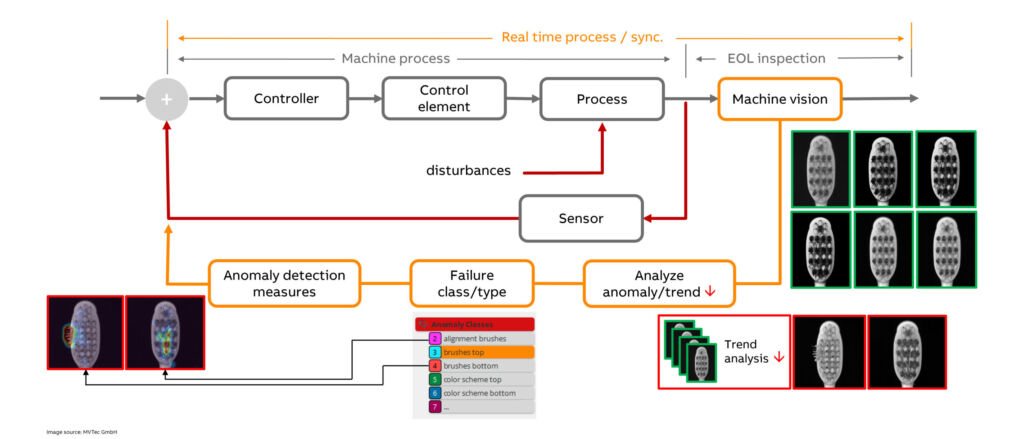
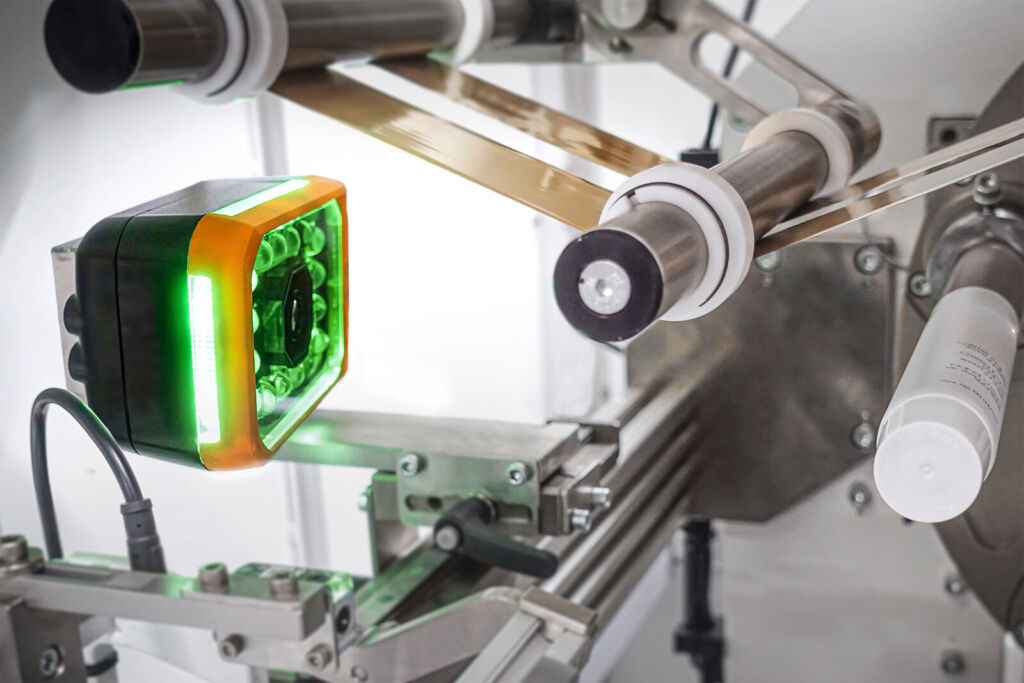
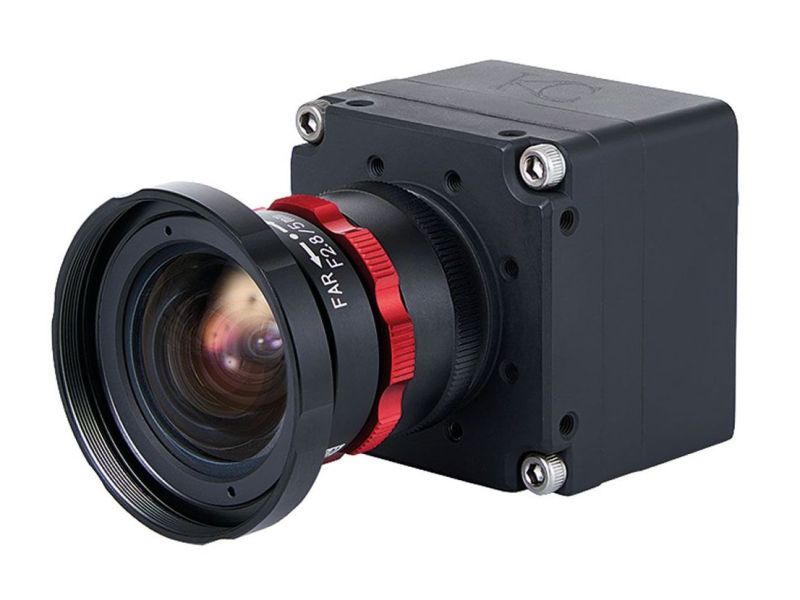
This opens new possibilities that go far beyond quality inspection. For instance, information from a vision system can now be fed into control loops in real time to provide advanced machine control, thus allowing a camera to synchronize with axis movements with microsecond precision. All hardware components require only a single cable (though a second hybrid connection would be needed to enable daisy-chain ca-bling with other vision components). The AI smart Camera comprises a lighting system, intelligent image processing algorithms and supports a full suite of AI-based vision functions, including anomaly detection, Deep Learning based optical character recognition (OCR), and object detection & classification. These can be combined with rules-based algorithms.
mapp Vision Framework
mapp Vision is a set of hardware components and software tools integrated into B&R’s automation platform. It is specifically designed for use with the company’s vision cameras. It includes hardware and software, such as the graphical interface mapp Vision HMI for visualization and control, as well as other functionalities for image acquisition, processing and analysis. Mapp Vision is designed to seamlessly integrate with B&R’s Automation Runtime, allowing for tight control and coordination between vision tasks and other automation processes.
Using the framework, control programmers can carry out numerous machine vision tasks themselves with minimal programming and no separate process variables are required. Components communicate intuitively with one another, meaning that only a few clicks are needed to integrate the images captured by a smart camera into an HMI application. Camera, lighting parameters and trigger conditions can all be changed on the fly, making product changeovers and other runtime adjustments easy to implement. Furthermore, since the application is also stored on a controller, no data is lost if the camera is replaced. Therefore B&R’s vision system makes it easy to link multiple machines together without loss of stability or quality.
Sub-microsecond synchronization
Combining synchronized AI and rules-based vision in a single camera allows manufacturers to optimize high-speed inspection, sorting and handling tasks.
Trigger signals can now come directly from the controller or motion application. Thanks to sub-microsecond precision, image triggers and lighting controls are synchronised with the overall automation system. This opens a new world of opportunities in which dynamic applications with frequently changing speeds no longer require a separate encoder on the camera input. With this in mind, B&R has developed a new just-in-time (JIT) compiler that generates executable machine code when the application is loaded, rather than interpreting it later at runtime. Combined with a new quad-core processor, this reduces the processing time needed for measurement tasks by 75% without needing to invest in dedicated PCs.
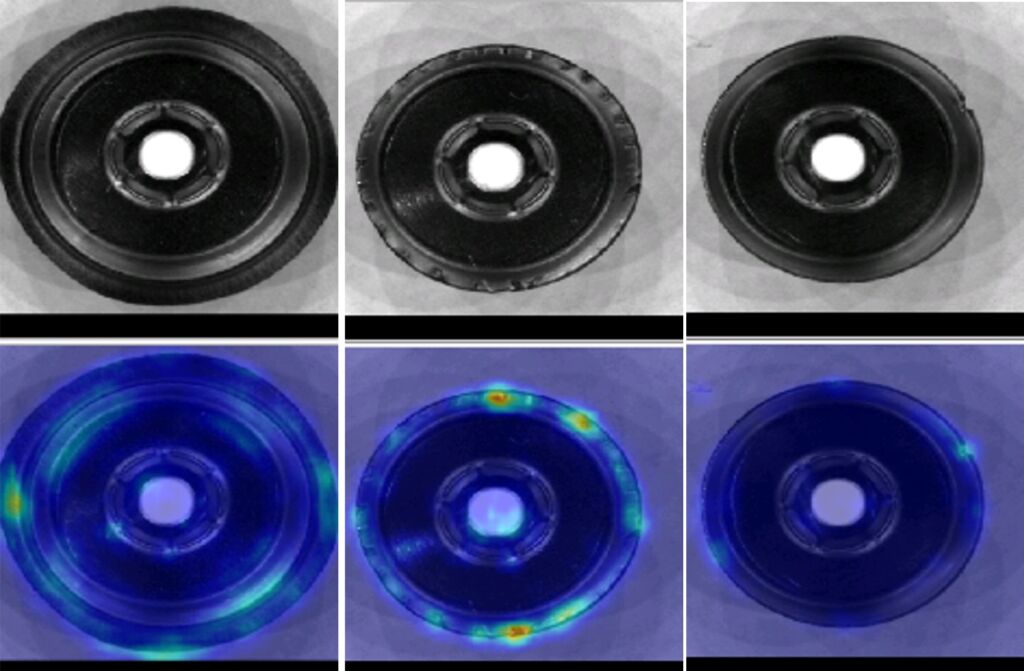
Anomaly Detection in 60ms
Anomaly detection focuses on spotting irregular patterns or unexpected deviations from established normality in visual data. Using rules-based algorithms, a camera learns what ‚good‘ looks like, allowing it to quickly recognize any deviations. Indeed, B&R’s anomaly detection time is 60ms, which is 15 times faster than Nvidia’s Jetson. A related measurement parameter is inference time.









![Die [me] – mechatronik & engineering wird digital](https://cdn.tedo.be/tedo-mu/wp_uploads/sites/10/2026/03/Unbenannt.jpeg)