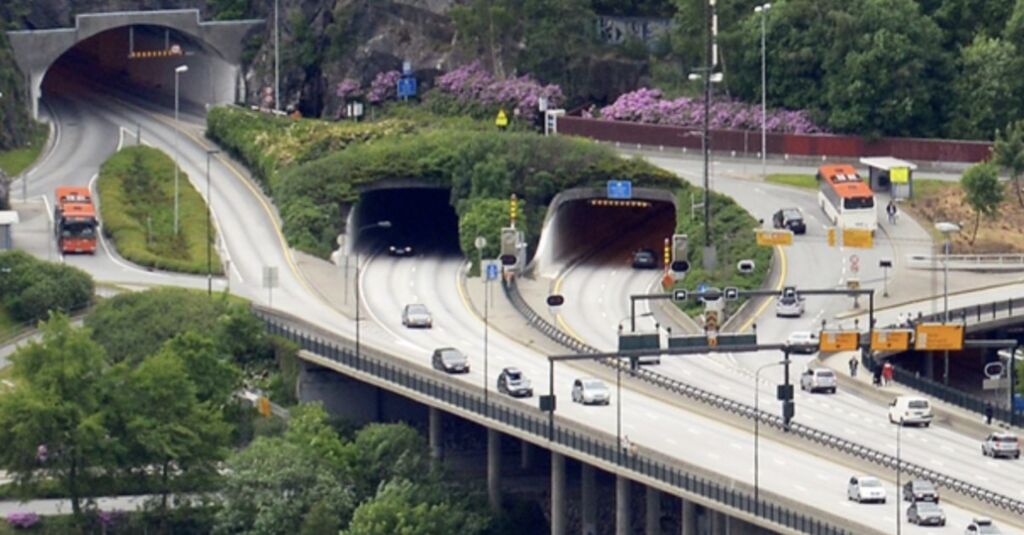
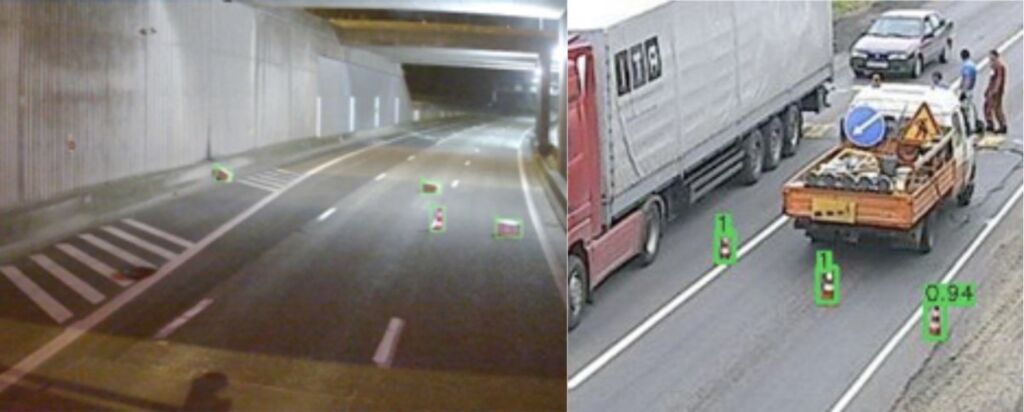
The road tunnel opened in 1992 and has two tubes of around 2.3km in length. In 2024, the tunnel had a technology upgrade, with the replacement of ventilation systems, lighting, drainage, and camera technology. Unique to this project is that AI-enhanced dual-vision cameras are used. The traffic cameras from Teledyne Flir combine thermal and visual imaging technology and rely on advanced deep learning algorithms that enable the camera to detect stopped vehicles, wrong-way drivers, queues, crossing pedestrians, and even smoke and fires in their early stages. Approximately 80 Teledyne Flir cameras were installed.
AI Incident Detection
Both visual and thermal cameras have their merits. A visual camera may provide operators with more detail to assess the nature of an incident, while thermal cameras have proven to be unbeatable in detecting incidents in complete darkness and in challenging weather conditions. Today, both detection technologies can be combined into one system, hereby offering operators a more comprehensive view of the environment and improved accuracy compared to single-sensor systems. Teledyne Flir’s TrafiBot Dual AI camera is an example of such a combined system. The camera combines a visual and a thermal camera in one unit, but what makes it stand out is the use of AI and deep learning. AI algorithms embedded in the camera analyse captured images in real-time and in full resolution. The camera is setting a new standard for automatic incident detection in tunnels, generating extremely accurate traffic data, incident detection information, and live track data. Of course, analytics on traffic cameras are not new. Early cameras from decades ago already used some form of AI. So, what’s the difference with this new generation of AI cameras?
Much has to do with how detection systems analyze video images. Early generations of smart cameras analysed the variation of gray levels in groups of pixels in successive video frames. When a vehicle enters a detection zone, the pixel value within that zone changes, and a detection is activated. Today’s AI systems, however, look at the entire camera image and use object detection techniques to analyse the traffic scene. This results in much better presence detection, better classification of traffic users, and the ability to determine position, speed, and direction. These new AI systems can handle more complex traffic situations and they are much better at making smart predictions.
Benefits of AI-Based Detection Systems
Nothing is a bigger nuisance for control room operators than having to pay attention to continuous unwanted alarms. AI can help to filter out unwanted alarms by distinguishing between routine activity, weather phenomena, and actual incidents. As an important aspect of their accuracy, AI-based systems are much more successful in detecting different vehicle classes. Detectors from Teledyne Flir will easily distinguish between a car and a van, or between a small and a large truck. It’s even possible to train a system to detect specific objects or incidents. And because cameras are so smart, installers nowadays are more flexible in installing their equipment. Even in less ideal camera positions, the detection performance of AI-based systems is high. The AI detectors can also predict vehicles trajectories. Based on vehicle parameters such as speed and direction, they can easily see where a car is going, even if for part of that trajectory the view on that car is occluded by a passing truck. This makes detection much faster and more accurate. Operators can even be warned by so-called pre-alarms for cars that are slowing down and likely to cause a collision. Data collected from a camera can be analysed over time to identify trends, patterns, or areas with a higher potential of incidents. This can be valuable for proactive traffic planning, infrastructure improvements, or for overall risk management.
www.flir.com