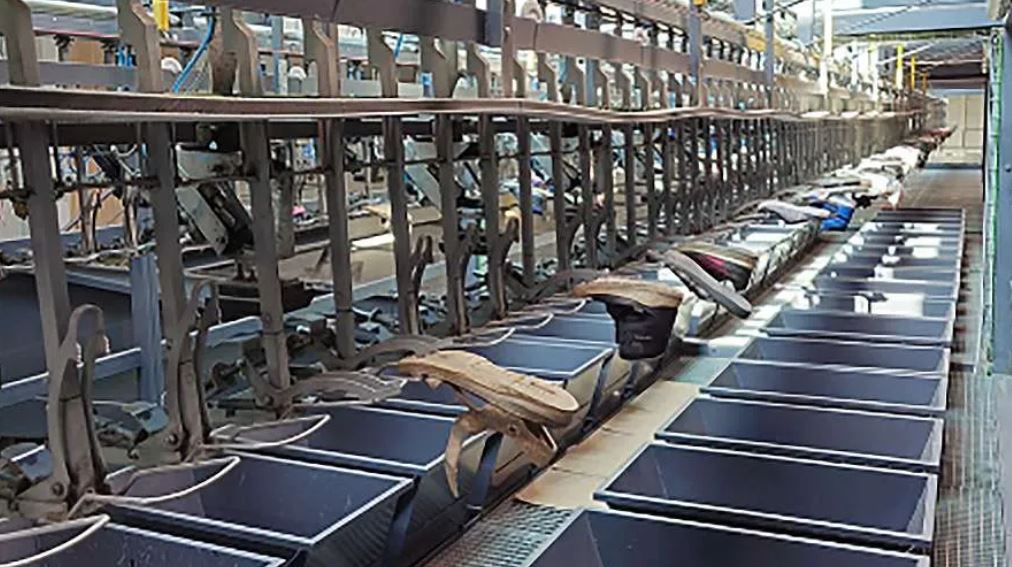
By integrating Specim hyperspectral cameras, the system adds material information to conventional RGB imaging and 3D measurements. This additional data layer allows the system to distinguish visually sim-ilar shoes and improves the reliability of AI-based pairing. As a result, the solution enables more efficient sorting and supports higher-value material recovery. The system processes up to 9,000 shoes per hour across two parallel sorting lines.
Avicon has nearly 25 years of experience in machine vision and has focused on hyperspectral imaging in recent years. The collaboration with Vive aimed to improve automation in footwear sorting within Vive’s high-volume operations. The company processes hundreds of tons of second-hand clothing daily using fully automated sorting lines. Their AI-based system analyses RGB images and 3D geometry, but cannot always distinguish between shoes made of different materials. Hyperspectral imaging fills this gap by providing reliable material identification for decision-making.
Material identification with hyperspectral imaging
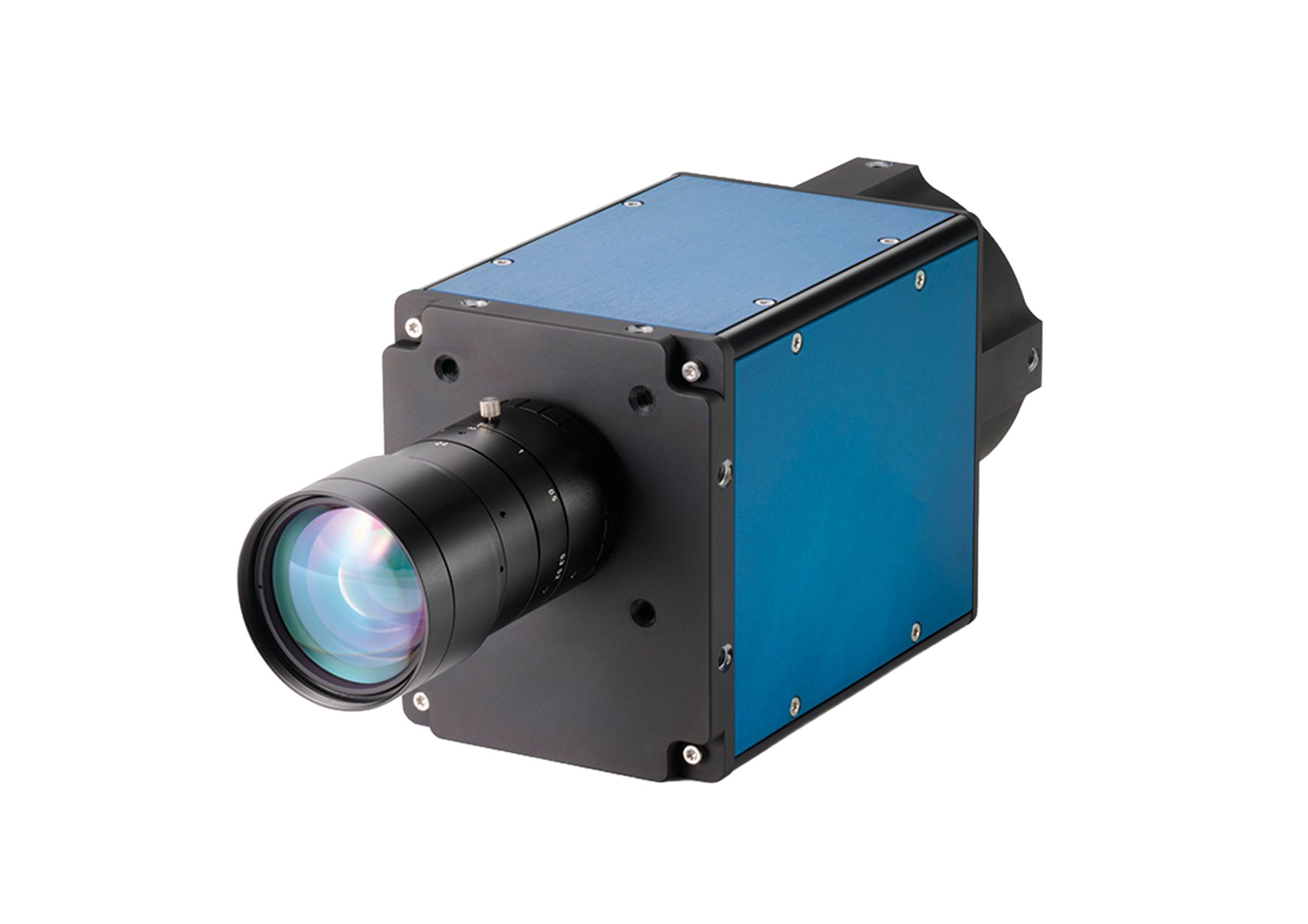
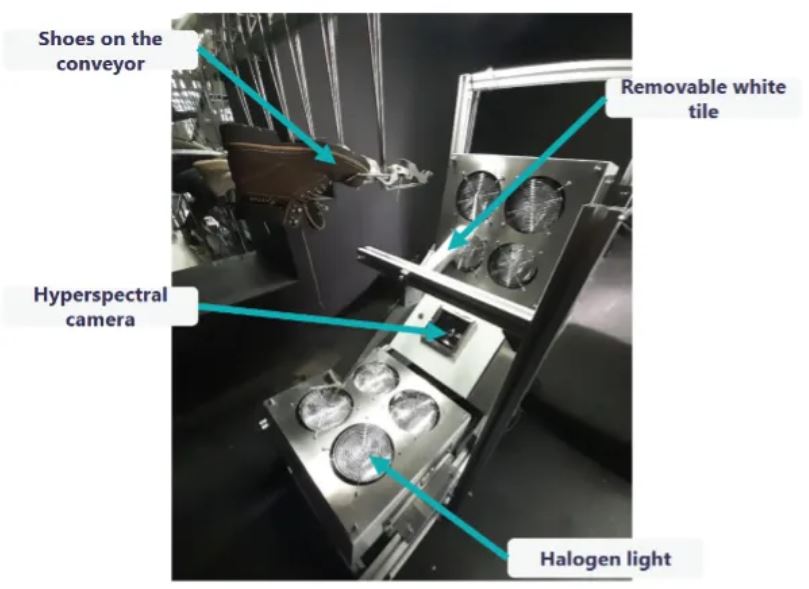
Two Specim FX17 hyperspectral cameras capture hyperspectral data in the NIR/SWIR spectral range, enabling reliable identification of materials such as rubber, plastic, leather, and textiles – even when visual appearance varies. Post-consumer footwear varies widely in colour, wear, and texture. By measuring material-specific spectral signatures, hyperspectral imaging enables consistent identification regardless of visual differences. After normalisation, the system processes spectral data using Avicon’s proprietary HSI-CNN classifier. In testing, material classification accuracy averaged 81.2 percent, with the highest accuracy for tex-tiles (87.8 percent) and rubber (85.1 percent). Parallel hyperspectral stations achieved consistent predictions in over 99.5 percent of cases. In the pairing process, this consistency is critical, as reliable agreement between stations is more important than individual classification accuracy. This level of performance enables stable, real-time decision-making in industrial-scale sorting. The system combines material data with RGB and 3D information and passes it to the AI pairing algorithm, which determines whether two shoes form a pair. When a match is identified, pneumatic actuators route the shoes to output buffers.
The system operates reli-ably in demanding industrial conditions. The imaging module includes two Specim FX17 cameras with 38° F/1.7 lenses, halogen illumination, and synchronised conveyor-triggered acquisition. Image processing occurs in three steps: normalisation on a Basler microEnable 5 Marathon VCL FPGA frame grabber, classification via HSI-CNN, and post-processing and visualisation in Zebra Aurora Vision Studio. The system achieves an image-to-decision time of around 600ms, enabling real-time operation. Two parallel processing lines allow a total throughput of approximately 9,000 shoes per hour, supporting continuous, high- volume processing. Shoes made from higher-value materials, such as leather, can be prioritised for pairing, increasing resale value. According to Jan Jaczewski, CEO of Avicon, the Specim FX17 camera delivers the performance required for industrial hyperspectral applications: high frame rates, excellent spectral and spatial resolution, TEC sensor stabilisation, automatic black calibration, and a high signal-to-noise ratio.
Outlook
Avicon sees increasing opportunities for hyperspectral imaging in circular textile processes. As textile and footwear reuse grows, automated sorting becomes essential for efficient processing and material recovery. Hyperspec-tral imaging, combined with AI, can also support new business models for sec-ondhand clothing by enabling detailed product information, similar to new retail. In recycling applications, accurate material data supports projects such as Vive Texcellence, which produces composite materials from used textiles and plastic waste.