The tracking of individual parts is a key element in the digitalization of production on the way to a smart factory. By associating relevant data, such as process parameters or quality data, with a single part throughout the process chain, a digital twin is created, making the entire product history traceable. This enables manufacturing companies not only to protect themselves against unjustified complaints or recourse claims but also to improve process understanding through targeted data analysis, potentially utilizing AI, and prevent quality defects proactively. The more complete the data set, the greater the potential for production optimizations and the associated cost reductions.
Finding Fingerprints
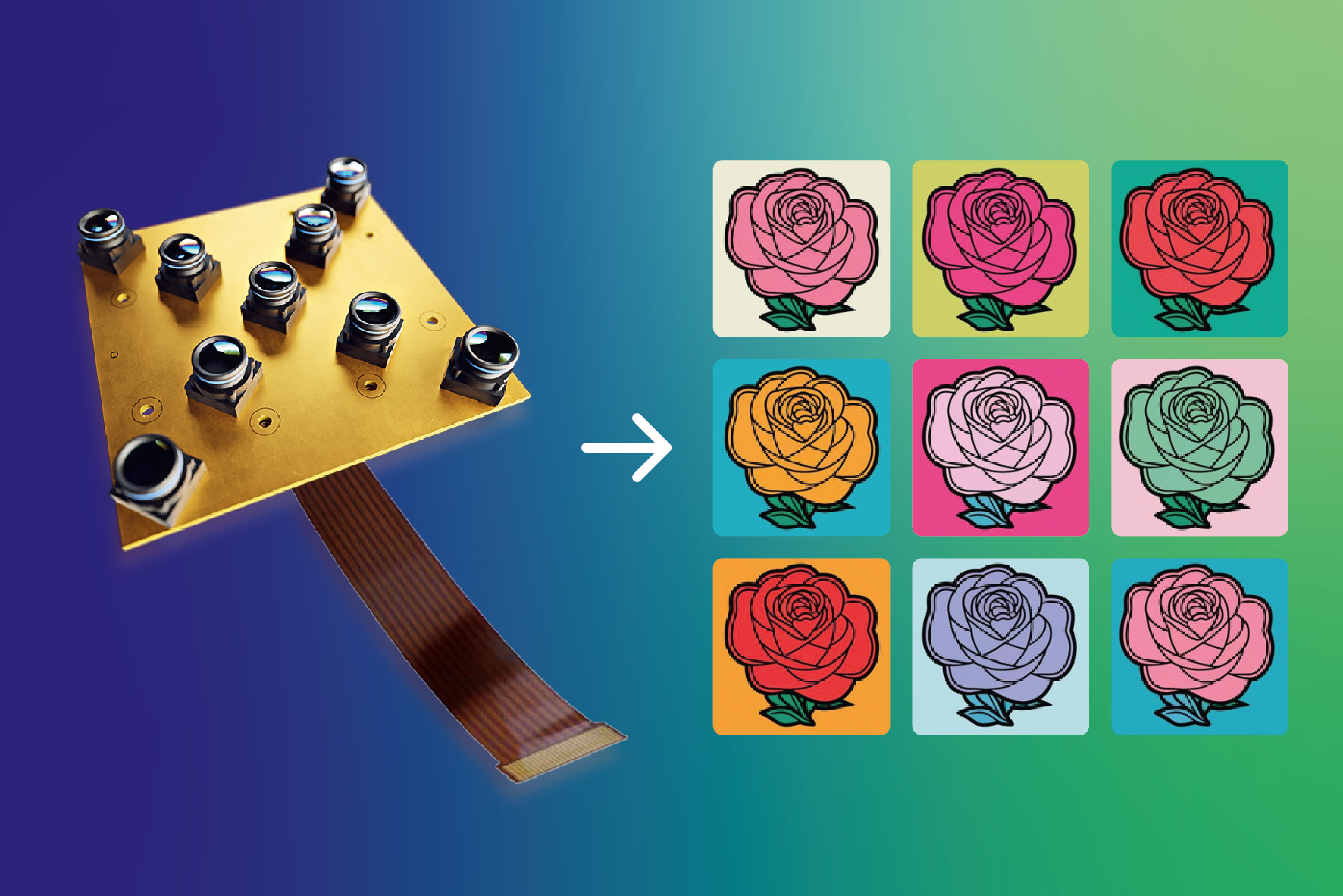
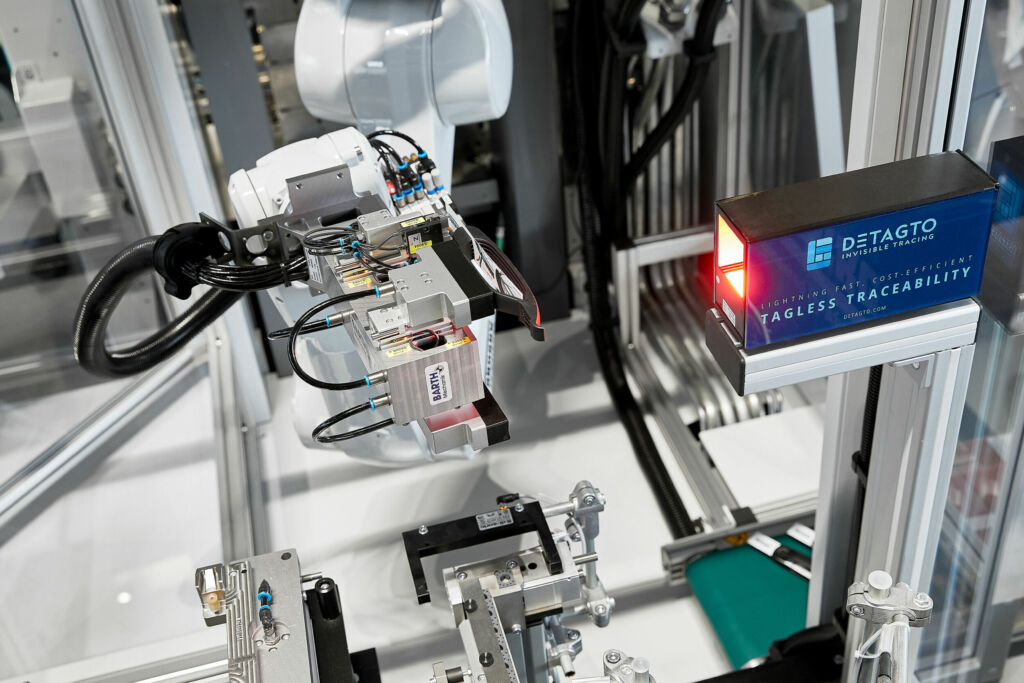
For tracking individual series parts, Detagto’s method first determines the surface area in which the fingerprint is to be recorded. An area of 1mm² is sufficient for this. This area is photographed for each manufactured component using a standard industrial camera and commercially available lighting. The Detagto software generates a digital identifier from the image that represents the part’s unique surface patterns, which is only approximately 1kByte in size. Thus, it is not the photograph itself but this compressed digital representation of the surface that is stored in a database. This makes the method easily applicable even for very large quantities. The digital identifier is linked to the unique serial number of the component in the database.
To identify a part, the same surface area is photographed again, whereupon the software extracts the fingerprint from the image and compares it with those previously stored in the database. The comparison takes place within a fraction of a second without the user noticing. The result is the serial number of the matching fingerprint or component. The identification is very robust against changes in ambient light and the surface. In pilot studies by a customer, it has been demonstrated that up to 70% of the fingerprint can be covered or destroyed, and the component is still successfully identified. For comparison, Data-Matrix Code (DMC) can typically still be read if a maximum of around 20% of the DMC is unreadable.
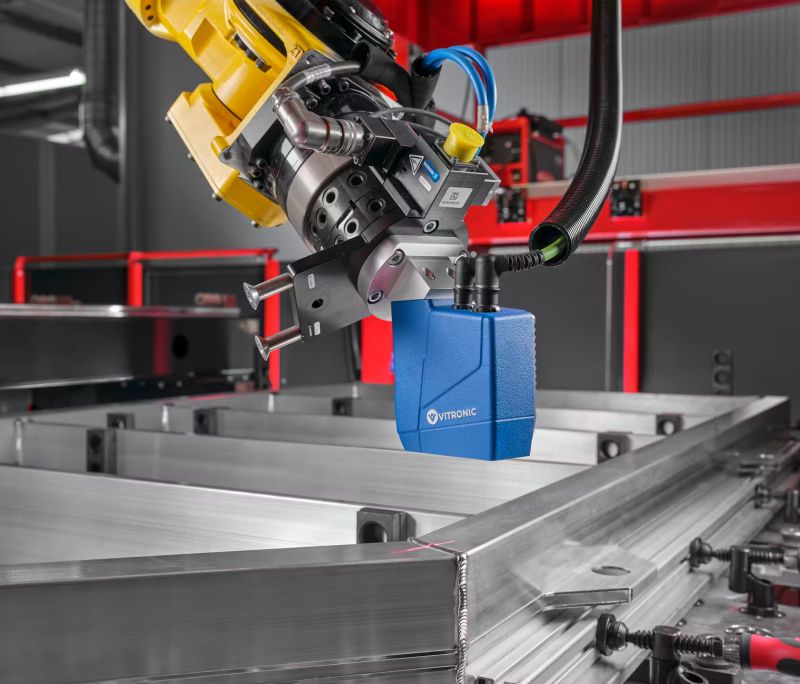
Detagto has already integrated the system into various manual and fully automated production lines. In automated operation, the camera is usually triggered by a voltage pulse from the PLC. Data exchange with software systems is possible via various interfaces such as OPC UA or a Rest API. The software is designed as a server application and can flexibly run on a workstation, a local server or in the cloud. All installed camera systems can be centrally controlled and monitored via a user interface in the browser. The connection is realized via Ethernet.
Use Cases
The use cases are mostly in the area of internal traceability, i.e. the traceability of parts within a production, as this is where most of the advantages over established methods are achieved. An example is the random spatial distribution of additives in plastic during injection molding, or the (microscopic) surface topography that forms when liquid metal solidifies. The method can also be used without customer or third-party approval since nothing about the part, material, or process is changed. Due to the simple hardware and the elimination of occupational safety measures (e.g. laser protection), the process is also significantly more cost-effective, especially in comparison with a marking laser. As only compact camera systems are required, the system is also predestined for digitization and retrofitting in existing production lines. It can also complement labels that are applied to each part at the end of a production line as a customer requirement. In this case, all production and quality data collected up to that point can be linked with the customer label at the end. The projects undertaken so far are remarkably diverse, as are the associated sectors. They include initiatives such as production optimization in the wood-based materials industry, waste reduction in plastics processing, and the replacement of lasered internal data matrix codes in the automotive sector.
Location: Stuttgart (Germany)
Year Founded: 2022
Founder(s): Christoph Gielisch,
Martin Ludwig,
Benedikt Wigger
No. of employees: 6
Commercial Status: Revenue
Detagto GmbH
Location: Stuttgart (Germany)
Year founded: 2022
Founder(s): Christoph Gielisch, Martin Ludwig, Benedikt Wigger
No. of employees: 6
Commercial status: revenue