Direct conversion X-ray sensors
Direct conversion X-ray sensors, particularly suited for the detection of soft X-rays, are extensively utilized in medical imaging, notably in mammography and dentistry applications. Concerning statistics show that, currently, one out of eight women get a false-negative mammography result and 50% of women undergoing regular screening will receive a false-positive. Heavy metal-based quantum dots such as lead sulfide (PbS) are able to resolve this problem thanks to their unique properties. Their sensitivity to X-rays is up to ten times higher than the current industry standard of amorphous selenium (a-Se). This heightened sensitivity ensures superior image resolution, especially in low-dosage applications like mammography and promises significant improvements in diagnostic accuracy, essential for both patients and healthcare professionals. Unlike a-Se, the fabrication of amorphous quantum dot layers is a straightforward process that does not require sophisticated techniques. Quantum dots is a solution-processable material, simplifying the device fabrication process and enabling seamless scalability.
Indirect conversion X-ray sensors
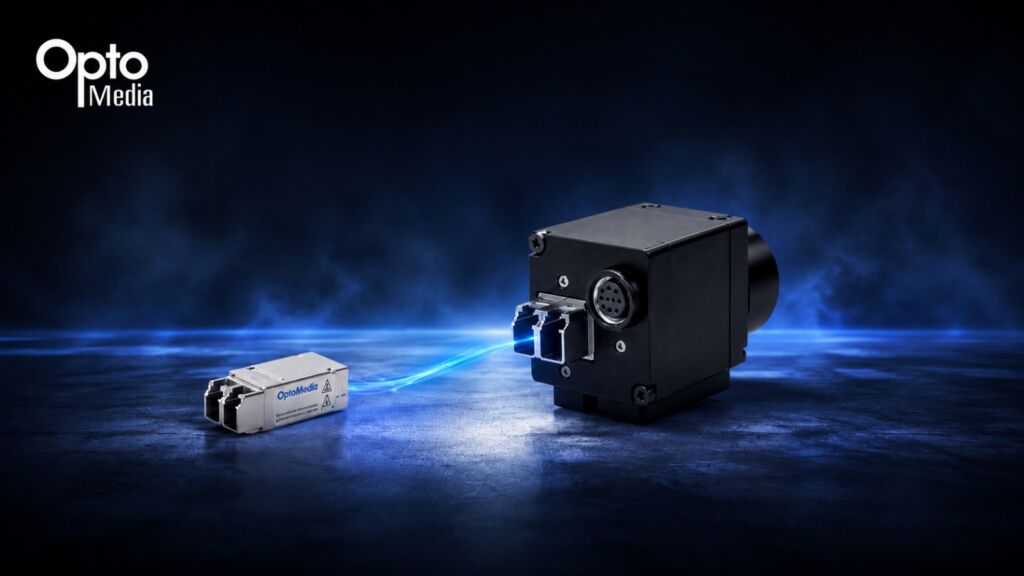
A second application to highlight is indirect conversion x-ray, which involves the utilization of quantum dot photo diodes alongside a scintillator. The scintillator absorbs X-ray photons and subsequently emits visible light photons, which are then absorbed by the QD sensor. Notably, the response time of QD photodiodes has been proven to be more than 100x faster compared to currently employed amorphous silicon photo diodes. Applied to the medical industry, this translates to higher patient throughput and faster image acquisition. This is crucial to reducing dose and contrast for already vulnerable patients undergoing multiple treatments. OptoMedias ultrakompaktes Mini SFF bringt zuverlässige, schnelle Glasfaserverbindungen in Industriekameras der nächsten Generation. ‣ weiterlesen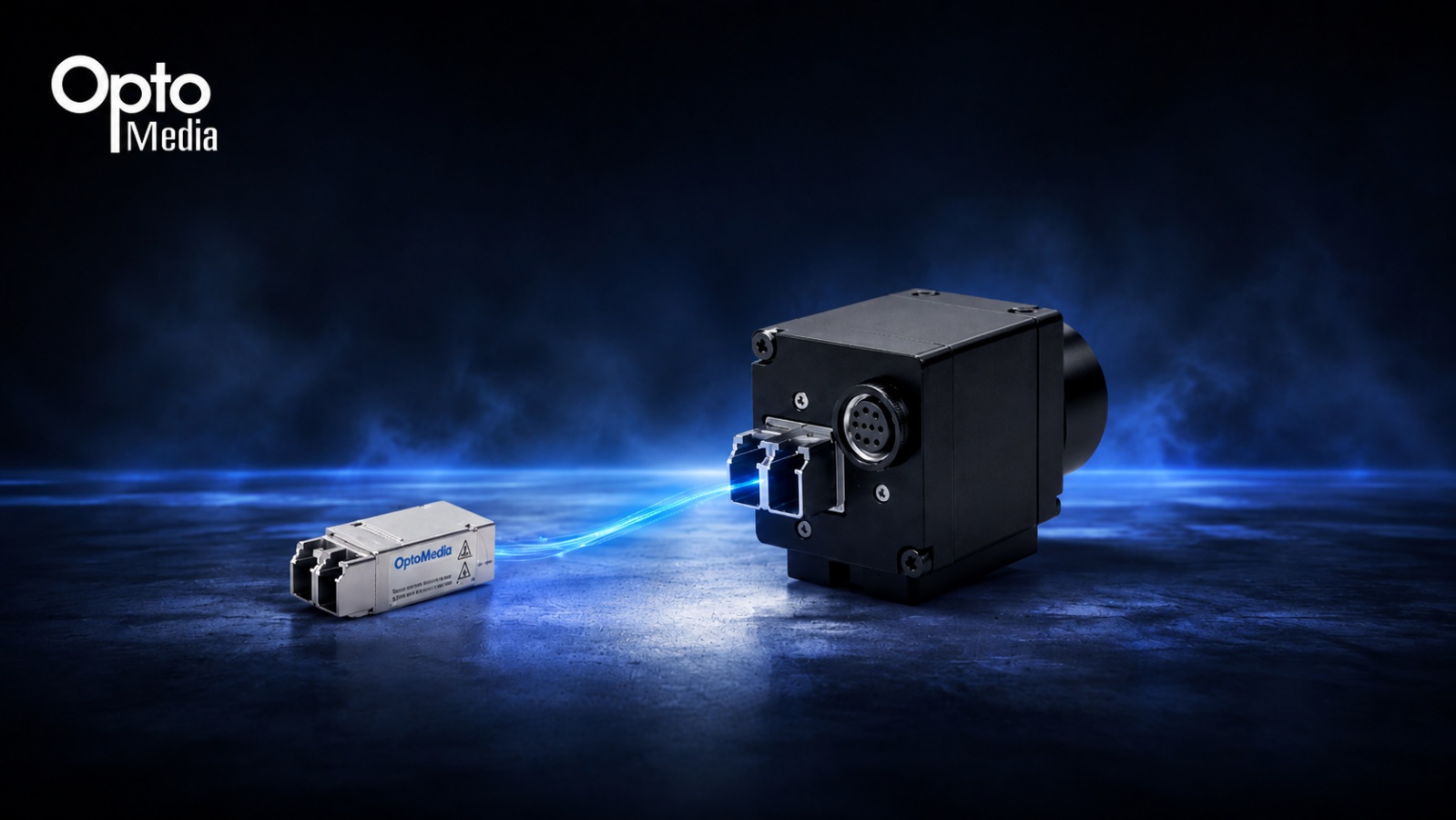
Fiber Mini SFF für GigE Vision
QD for SWIR sensors
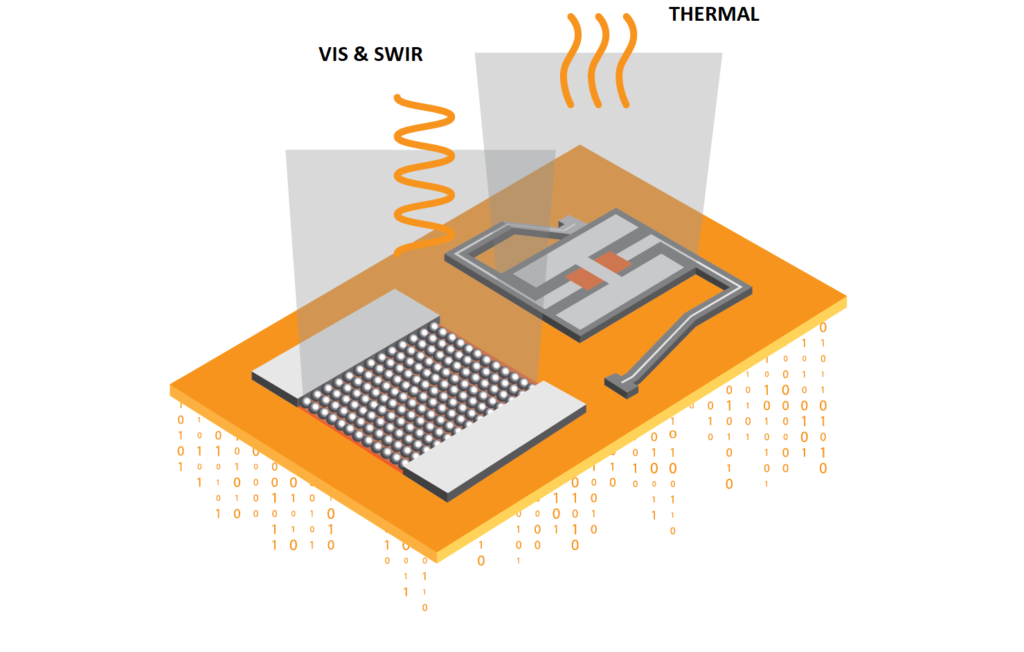
Finally, QDI’s quantum dots material can be applied to short-wave infrared (SWIR) sensing. SWIR sensors have a myriad of applications, ranging from night vision and face recognition to inspection, machine vision, product monitoring and sorting. SWIR range (1.100 to 2.500nm) lies well beyond the reach of conventional silicone-based imaging sensors (whose quantum efficiency fades beyond 1.000nm) and current sensors are typically built based on indium gallium arsenide (InGaAs) or mercury cadmium telluride (MCT). However, the high complexity of the fabrication processes associated with these technologies drive up production costs, acting as a significant barrier to wider adoption of SWIR sensors.

Our development allows PbS quantum dots to fulfill the performance requirements set by electronic manufacturers and produce SWIR sensors that are both scalable and affordable. This was possible due to solution-processable synthesis and application of QDs. Deposition of QD films from the specialized inks can be conveniently integrated into the existing wafer-level fabrication facilities. QD film can be directly deposited in a single step onto a CMOS wafer using standard deposition techniques, such as spin coating, resulting in a monolithic sensor integration. QDI’s SWIR sensors achieve quantum efficiency of >20% at 1.550nm while having a dark current of www.qdisystems.com