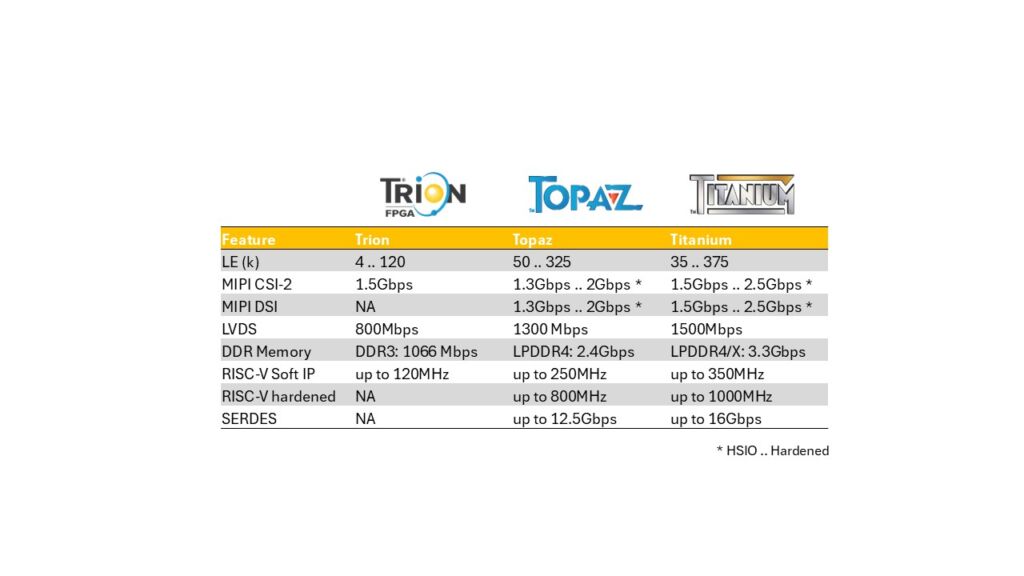
Efinix FPGAs are based on the patented Quantum Architecture. A key element is the XLR cell, which stands for an exchangeable logic and routing cell. As the name suggests, this cell can be used for both logic and routing. This circumvents all the drawbacks of previously available architectures with fixed routing resources. The FPGAs are highly versatile and can be used in a wide range of applications. The current product lineup consists of three families: Trion, Topaz and Titanium.
• The Trion family is designed as a general purpose FPGA series and offers a wide range of logic element counts, ranging from 4 up to 120k LEs. It also includes several distinctive features such as hardened MIPI CSI-2 controllers with data rates of up to 1.5Gbps, as well as a hardened DDR3 Controller supporting speeds of up to 1,066 Mbps.
• Topaz and Titanium FPGAs are built on the second generation of the Quantum architecture and introduce targeted improvements to the XLR cell, including support for 8bit shift registers and fracturable LUTs. Both families share the same underlying technology and are pin compatible within their respective packages. Notable features of the Topaz and Titanium series include high speed transceivers with data rates of up to 16Gbps and native support for PCIe Gen4 x4.
One of the key advantages of Efinix FPGAs is their low power consumption combined with a high-speed fabric, which is achieved through the Quantum architecture and its patented XLR cell. Compared to equivalent FPGAs from competitors, Efinix devices achieve approximately half the die size at a comparable logic density, which in turn enables the use of very compact packages. An example of this is the Ti60V64, which measures just 3.5×3.4mm with a 0.5mm pitch. Despite its small footprint of only 11.9mm², it integrates 62k LEs or 60k XLR cells, resulting in a logic density of approximately 5.200 LEs per mm². The area, performance, and power optimized architecture allows the integration of the basic companion chips typically required alongside an FPGA, namely external DRAM (like HyperRAM or LPDDR4) and SPI Flash, into a single package. Efinix refers to this approach as System-In-Package(SiP).
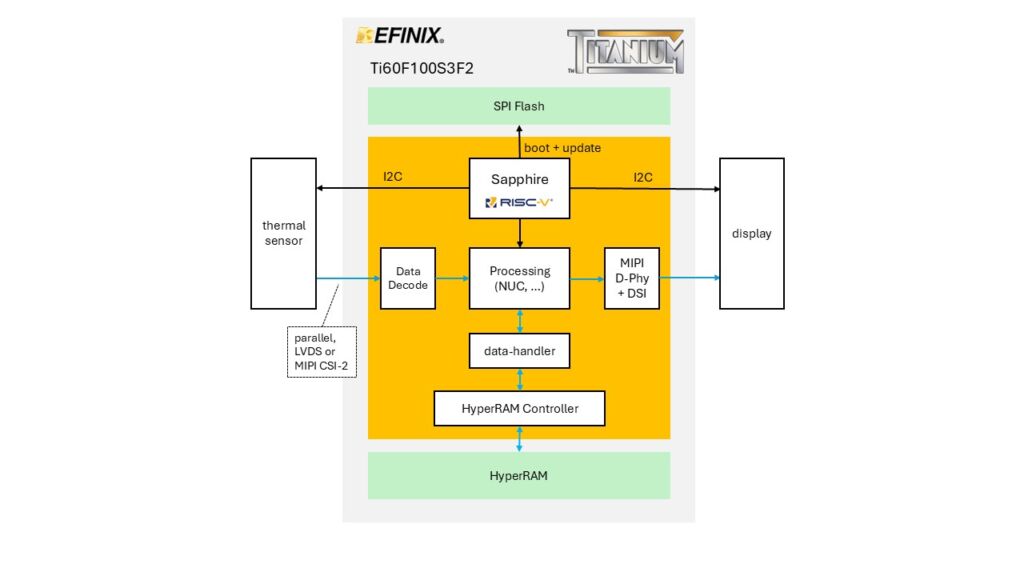
Handheld battery powered device
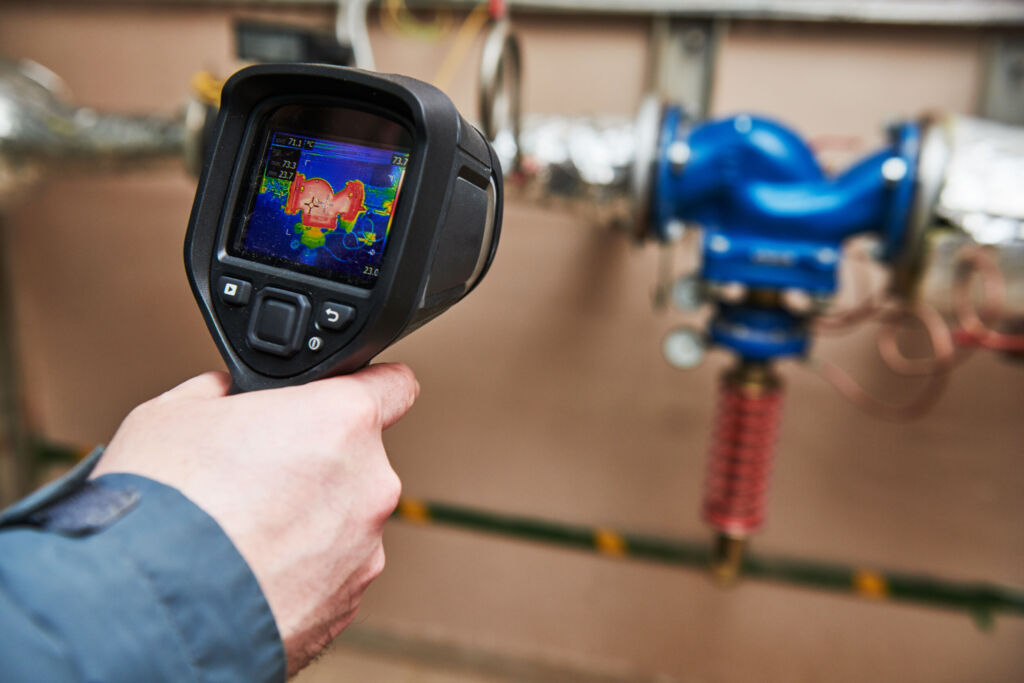
A concrete example of the System-In-Package technology is the Ti60F100S3F2, which combines a 62k LE FPGA together with HyperRAM and SPI Flash in a compact 5.5×5.5mm package. This level of integration directly saves valuable space on the PCB and reduces its overall complexity, which in turn leads to lower costs. This FPGA is well suited for a variety of different thermal camera applications. However, to best illustrate the strengths of the device, consider the following product scenario: a battery powered handheld thermal camera with an integrated display. This use case highlights the core advantages of the Ti60F100S3F2, particularly its compact form factor and low power consumption.
Whether the infrared detector communicates via a MIPI CSI-2 interface or whether analog signals are digitized through an ADC and subsequently transmitted to the FPGA via a serial interface such as LVDS, the Ti60F100S3F2 is well equipped to handle both scenarios. Thanks to the integration of SPI Flash and HyperRAM within a single package, the PCB can be designed smaller and with reduced complexity, while also benefiting from a fully tested system. The 62k LEs furthermore allow for the integration of a soft RISC-V based SoC, which can take over tasks such as controlling the connected sensor or display via I2C or SPI. In the Area optimized version the Sapphire Lite needs around 4k LE. In the light of upcoming regulatory requirements regarding updateability (update in the field), the Sapphire SoC can also take on this responsibility.
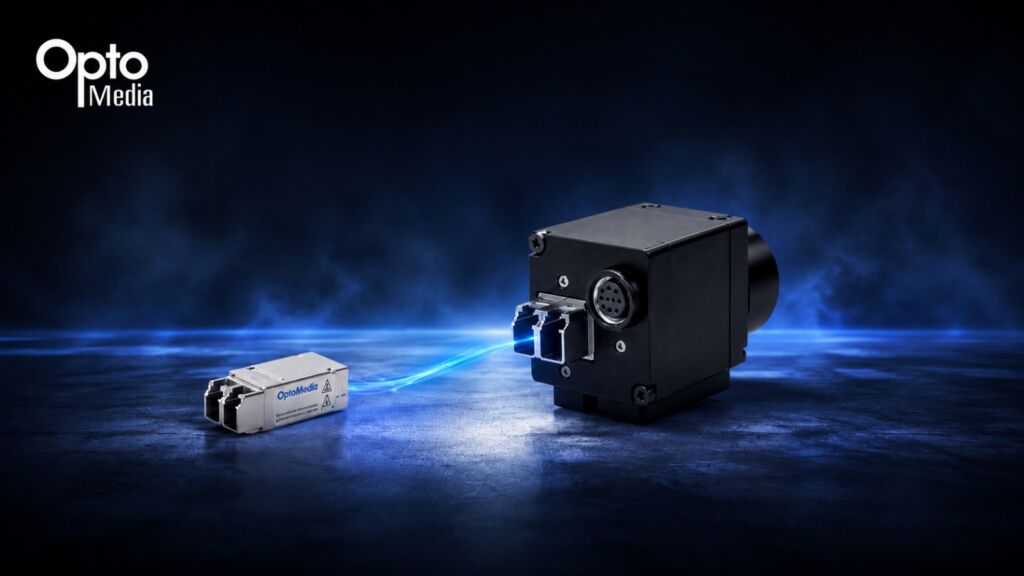
To compensate for the non-linearities of the sensor, various processing functions can be implemented within the processing pipeline, including Non-Uniformity Correction (NUC), Bad Pixel Replacement, Dynamic Range Compression, Noise Reduction, and Temperature Linearization. The embedded memory and the HyperRAM play a key role in this context, as both allows correction data to be loaded at runtime and image data to be buffered as needed. For applications where the Ti60 provides a solid foundation but additional memory and logic resources are required, Efinix also offers a larger SiP solution: the Ti125M225S4F4. This device integrates 122k LEs, 2x 256 Mbit HyperRAM, and 256Mbit SPI Flash, all within a compact 8×8 mm package. OptoMedias ultrakompaktes Mini SFF bringt zuverlässige, schnelle Glasfaserverbindungen in Industriekameras der nächsten Generation. ‣ weiterlesen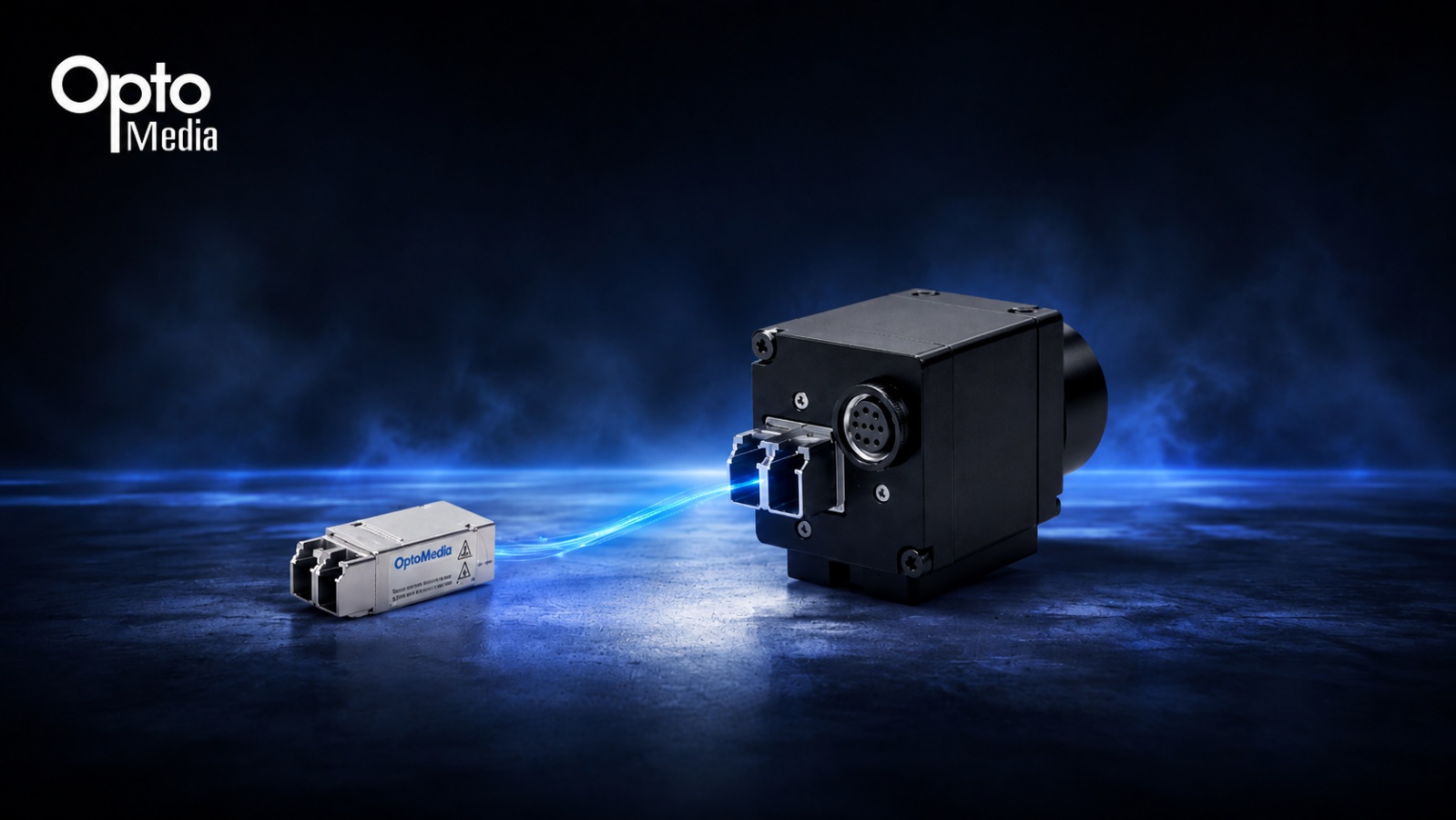
Fiber Mini SFF für GigE Vision
High-end device with
integrated detection
For a thermal camera with advanced features, such as the ability to connect a display via HDMI or DisplayPort for on-site monitoring and direct configuration, or a 10G Ethernet connection for transferring image data to a PC, or even on-device analysis of image data using AI powered approaches, the Efinix Titanium Ti135N567D2F4 with integrated 2 or 4Gb LPDDR4x and SPI Flash is an ideal choice. In addition, this FPGA offers:
• A 132k LE, or roughly 130k XLR cell, FPGA in a 16x16mm package
• High-speed transceivers with eight lanes running at up to 16Gbps, natively supporting PCIe, 10G Ethernet (USXGMII), and 2.5G / 1G Ethernet (SGMII) at the PCS layer
• When using only the PMA layer, a wide variety of additional interface protocols can be implemented, including HDMI (1.4, 2.0, 2.1), DisplayPort (1.3, 1.4),eDP, 3G/6G/12G-SDI, JESD204B RX/TX, and SLVS-EC (Gen1/2)
• IP cores are available for all of the protocols mentioned above
Detection tasks for various application scenarios, such as anomaly detection, alert generation, and defect classification, can be addressed using either classical image processing approaches or specially trained AI models. Regardless of the chosen approach, the solution can be adapted flexibly, as field updates are supported. When an AI-based approach is selected, two different frameworks are available for Efinix FPGAs:
a) The Efinix TinyML AI Solution is built around three core components: the TensorFlow Lite framework as the software foundation, a RISC-V SoC that can be customized as needed, and a configurable Quantum Accelerator. Together, these components not only form the technical basis of the solution, but also enable a highly flexible ecosystem with extensive scaling capabilities.
b) For applications where the free Efinix TinyML approach reaches its performance limits, Efinix offers the eCNN IP Core as an additional scalable hardware solution for accelerating neural networks. This licensed accelerator integrates seamlessly into established open-source ecosystems such as ONNX and leverages the free Efinix Buildflow. Beyond object and person detection, the eCNN IP Core can also be used to implement high-resolution upscaling of image data. In this context, the neural network based approach delivers superior visual image quality compared to conventional interpolation methods like Nearest-Neighbor or Bilinear Interpolation.
In a proof of concept, AI-based upscaling with a factor of 4x was implemented on a Titanium Ti375C529. The total power consumption of the FPGA board, running four eCNN IP-Core instances, a RISC-V based Sapphire SoC, and an LPDDR4x Memory IC with dedicated controller, was only approximately 3.5W. The power draw was measured under load with a high toggle rate. In this specific case, only around 28 percent of the XLR cells, 34 percent of the memory blocks, and 21 percent of the DSP blocks were utilized for the eCNN IP-Cores. This means that you have the possibility to add additional features to your design for image transfer and communication interfaces.
In addition to the ability to integrate AI-based approaches, the Sapphire SoC also supports running an embedded Linux operating system, enabling a wide range of additional functionalities. Using Buildroot, users can configure a custom root filesystem tailored to their specific requirements. In the context of a camera application, this allows for the deployment of HTTP web servers or REST APIs, enabling users to configure and administrate the camera system remotely. Thanks to the extensive Linux ecosystem, features such as user management, encryption, field updates, and backups can be implemented reliably and efficiently.
Demanding Operation
Condition up to 125°C