Silicon is often regarded as impractical for LWIR applications, but when a purer grade of silicon is used and the proper coatings are applied, its combination of optical, mechanical and thermal properties make it an excellent alternative to germanium and chalcogenide glasses for LWIR protective windows, offering the ideal balance of performance, cost and reliability.
Thermal imaging plays an increasingly important role in a wide range of industries, including military surveillance, industrial inspection, environmental monitoring and medical diagnostics, which is why the need for high-quality optical components that operate efficiently in the long-wave infrared (LWIR) range (8-12µm) has never been greater. Thermal imaging systems depend on infrared (IR) light to detect thermal radiation emitted by objects and convert it into clear and accurate images. The performance of these systems is heavily reliant on the materials used in their optical components. Germanium is typically recognized as the top choice for many LWIR optical components because of its high refractive index and low dispersion; however, its high cost and sourcing challenges make it difficult to use in cost-sensitive or large-scale production applications. Chalcogenide glass is another option, but it has limitations in durability and mechanical strength.
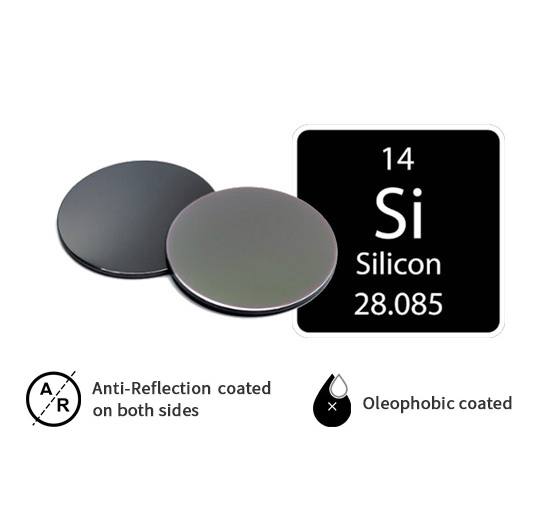
Silicon, although not a great solution for some optical components, is an excellent cost-effective alternative for Protective Windows when imaging in the LWIR range. Protective windows in thermal imaging systems act as a shield, safeguarding the internal optical components from physical damage while allowing for clear transmission of LWIR light. They need to offer excellent transmission in the LWIR range and be durable enough to endure harsh conditions without compromising the accuracy of thermal measurements. Silicon meets all these requirements when a purer grade of silicon is used and the proper coatings are applied – offering the right combination of transparency, durability, thermal conductivity and mechanical strength.
Benefits of Silicon for LWIR Protective Windows
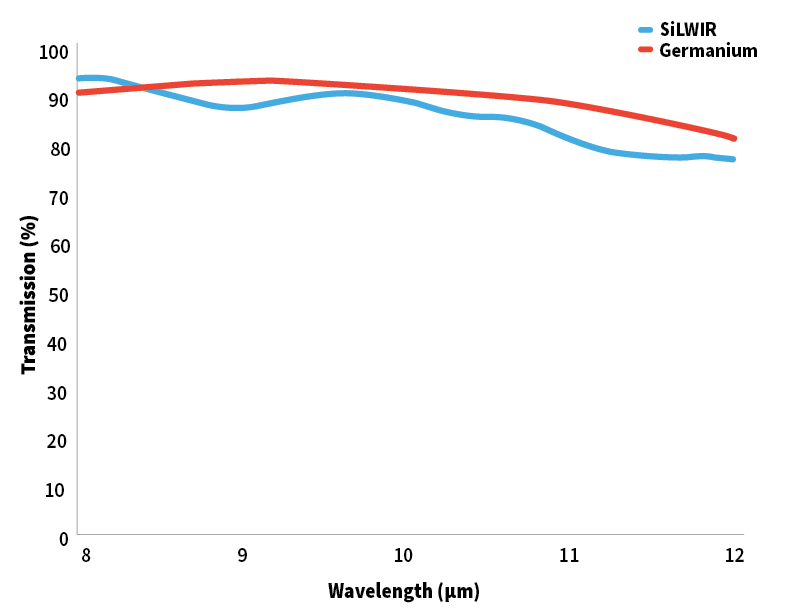
- Superior Transmission in the LWIR Range: One of the key properties for materials used in thermal imaging systems is their ability to transmit LWIR light with minimal absorption. This can be achieved using pure-grade silicon and the proper coatings. Anti-reflection (A/R) coatings can reduce surface reflections, allowing more LWIR light to pass through the protective window and reach the sensor. Diamond-like carbon (DLC) coatings enhance the durability of silicon while maintaining its optical clarity, making it well-suited for harsh environmental conditions where mechanical strength is crucial. The relative spectral response of pure-grade silicon with DLC and double-side A/R coatings in LWIR imaging differs by only 10 percent compared to germanium, demonstrating its effectiveness in LWIR applications.
- Cost-Effectiveness: Silicon is abundant and inexpensive, and it’s one of the most widely used materials in the semiconductor and electronics industries, meaning manufacturing processes for silicon-based components are well-established and highly efficient. The wide availability of silicon allows manufacturers to obtain it at a relatively far lower cost compared to germanium. As a result, silicon is an economically viable option for LWIR Protective Windows, especially in high-volume applications where cost control is essential.
- Durability & Mechanical Strength: Protective Windows need to withstand vibration, impact and extreme temperatures. Silicon offers twice the breakage resistance of germanium – proven in dropball tests. Its exceptional durability, hardness and strength allow it to be highly resistant to cracking and physical wear, making it an ideal choice for demanding optical and imaging applications, such as military, aerospace and industrial applications, without compromising optical performance.
- Thermal Conductivity & Stability: Thermal conductivity is another crucial factor for materials used in LWIR applications, particularly for Protective Windows. Silicon has excellent thermal conductivity, which helps dissipate heat efficiently. This is important in preventing overheating of the system’s internal components, especially in high-temperature environments. Silicon’s ability to effectively dissipate heat helps maintain the performance of the Protective Window and the longevity of the system.
- Manufacturing Capability & Availability: Silicon has been widely used in the electronics industry for decades, and its manufacturing processes are highly refined and reliable. This extensive experience with silicon technology ensures that silicon-based Protective Windows are produced to high-quality standards with consistent results. This maturity in manufacturing also means that silicon is readily available in large quantities, with well-established supply chains that ensure short lead times and predictable costs.
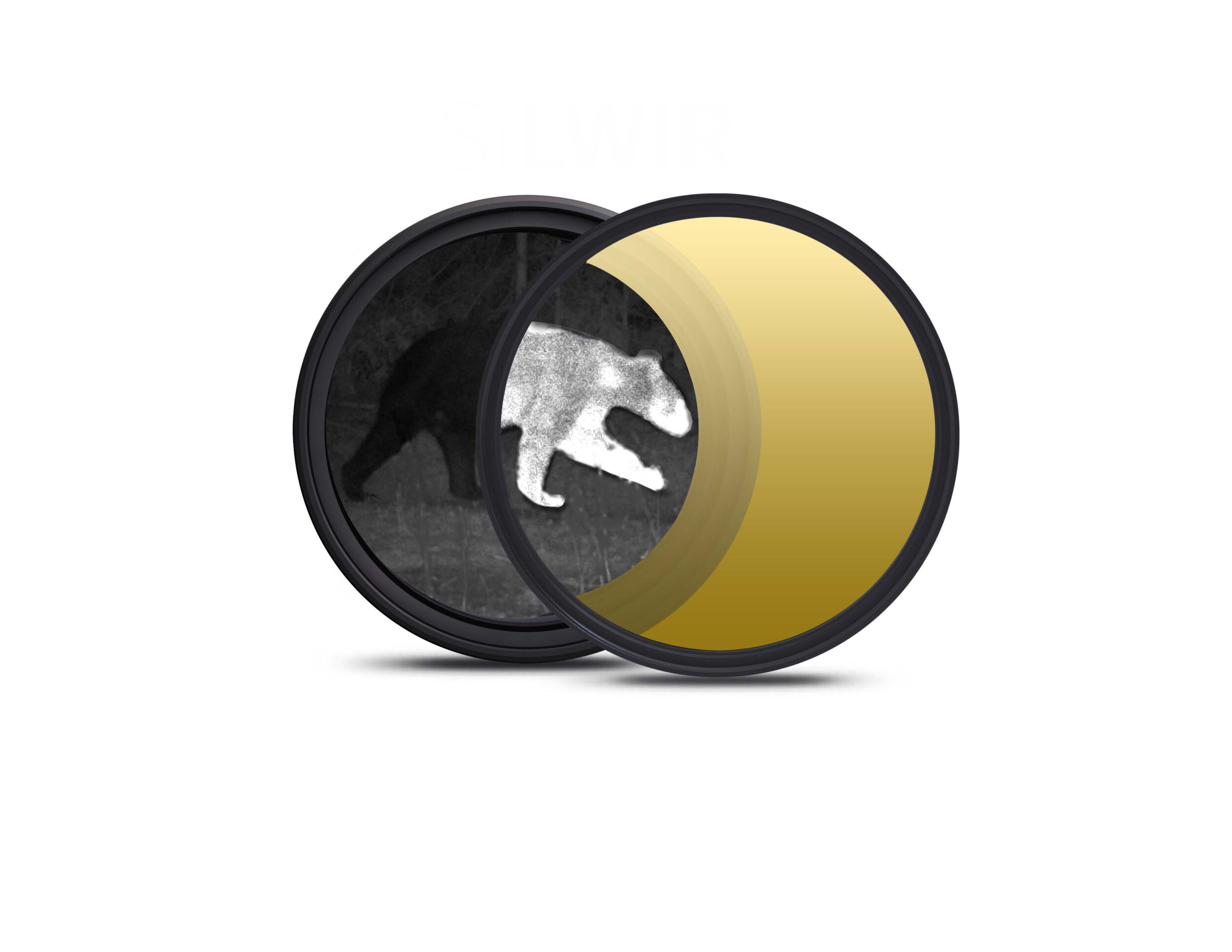
and MIL-C-48497C standards for severe abrasion resistance. – Bild: Midwest Optical Systems