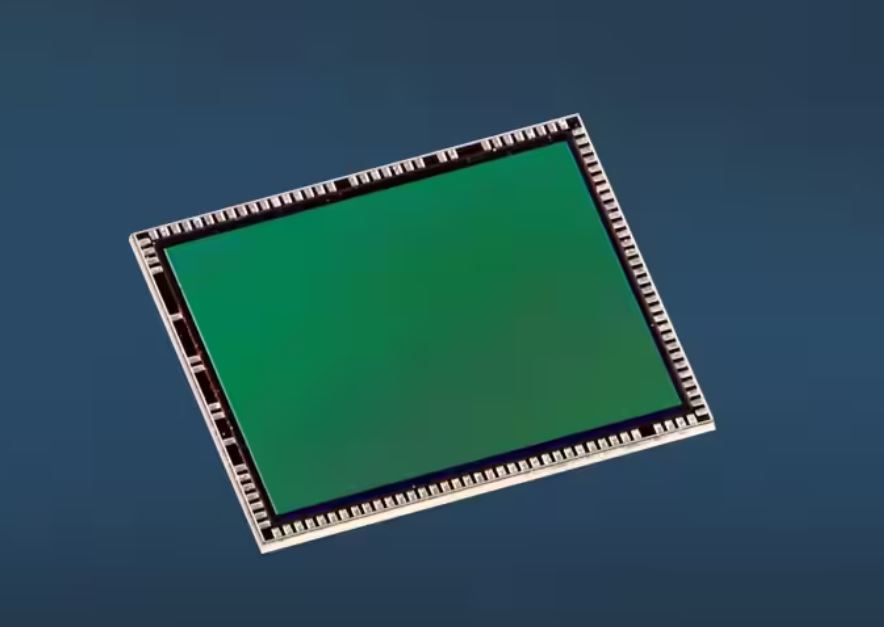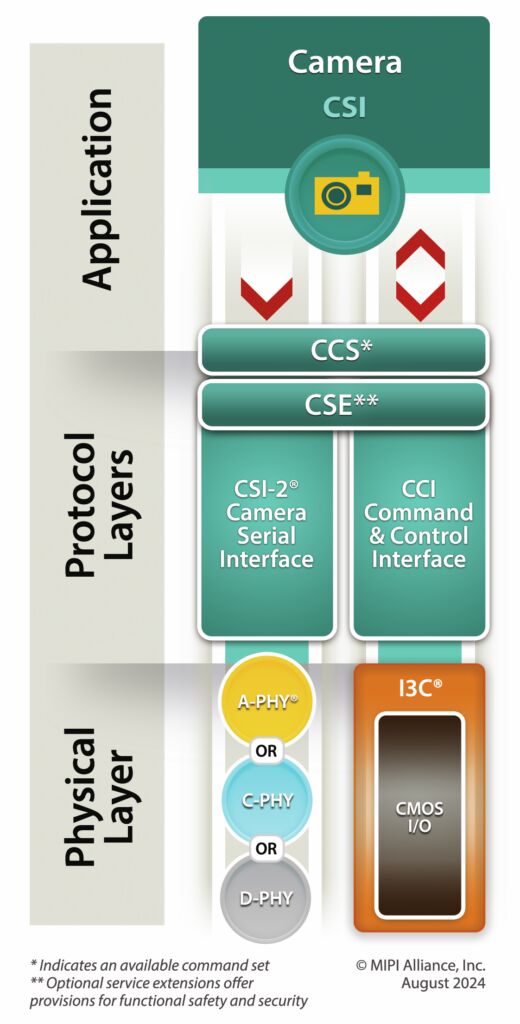
Today, MIPI CSI-2, which was originally designed to facilitate the transfer of pixel array data from image sensors to application processors within mobile systems, is recognized as the world’s most widely adopted camera and imaging interface, particularly because the specification has continually advanced to accommodate the expanding array of application areas. CSI-2 has evolved to meet the diverse demands of modern imaging technologies, accommodating premium image quality, high-speed performance with low latency, and optimized power efficiency.
Core CSI-2 Features that Support MV Applications
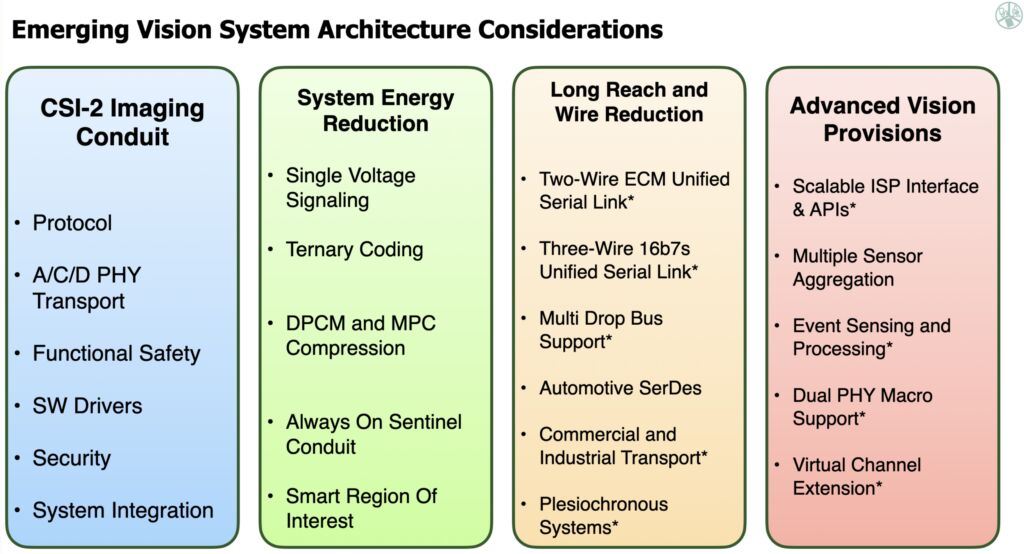
MIPI CSI-2 provides system designers with the flexibility to utilize up to 32 virtual channels, accommodating a wide variety of image sensors across multiple data types. This flexibility allows for efficient image sensor aggregation and processing without increasing overall system costs. CSI-2’s Latency Reduction and Transport Efficiency (LRTE) capabilities further optimize data transport by minimizing the number of wires, reducing emissions, and lowering energy consumption. Other core features include:
- Differential Pulse Code Modulation (DPCM) compression, which delivers superior signal-to-noise ratio (SNR) images free from compression artifacts while reducing bandwidth requirements.
- Smart Region of Interest (SROI) functionality, which improves system efficiency by processing relevant subframes.
- Always-On Sentinel Conduit (AOSC) for continuous monitoring using ultra-low-power sensing with vision digital signal processors (VDSPs), activating higher-power host central processing units (CPUs) only when specific events require it.
- Multi-Pixel Compression (MPC), which optimizes pixel compression for very-high-resolution Tetra-Cell and Nona-Cell image sensors equipped with multi-pixel color filter arrays (CFAs).
- RAW28 color depth pixel encoding, providing unprecedented image quality and an enhanced SNR ratio in advanced image sensors.
The new MIPI Camera Security Framework introduces a flexible approach to incorporating end-to-end security in automotive and other applications utilizing the MIPI CSI-2 specification.
Current Developments Targeting the MV Ecosystem
A number of key MV-driven developments are currently underway that build on the most recent update to the CSI-2 specification, version 4.1. Among these new developments are:
- Event sensing and processing (ESP): Leveraging principles of evolutionary biological vision, this initiative pioneers a new generation of imaging architecture solutions.
- MIPI Two-Wire CSI-2 Conduit: Introduces a highly anticipated differential embedded clock and data signaling solution, targeting PC, client, and other platforms.
- MIPI Three-Wire CSI-2 Conduit: Extends the capabilities of ternary signaling and compression, also designed for PC, client, and other platforms.
- Plesiochronous Reference Clock Provisions (PRCP): Supports commercial and industrial solutions where Voltage Controlled Crystal Oscillators (VCXOs) may not be ideal.
- Multi-Drop Bus (MDB): Reduces engineering costs associated with allocating silicon for point-to-point connections.
- Dual PHY Macro Support (DPMS): Enhances the MIPI CSI-2 over C-/D-PHY transport solution, supporting a wide range of computer vision applications.
- Commercial and Industrial Transport Solution: Explores the use of MIPI in-house A-PHY and D-PHY solutions to bridge engineering gaps traditionally addressed by SLVS-EC.
- Scalable ISP Interface (SISPI): Enables a scalable Image Signal Processor interface and APIs, facilitating native streaming, HDR, and NNA-assisted scene analytics.
- Minimum Data Rate Alignment (MDRA): Addresses system integration and multi-PHY signaling for CSI-2 sensors in complex vision systems, such as AR/VR/MR headsets and beyond platforms.
- Virtual Channel eXtension (VCX): Supports the geometric increase of MIPI CSI-2 sensors in AR/VR/MR headsets and other platforms.