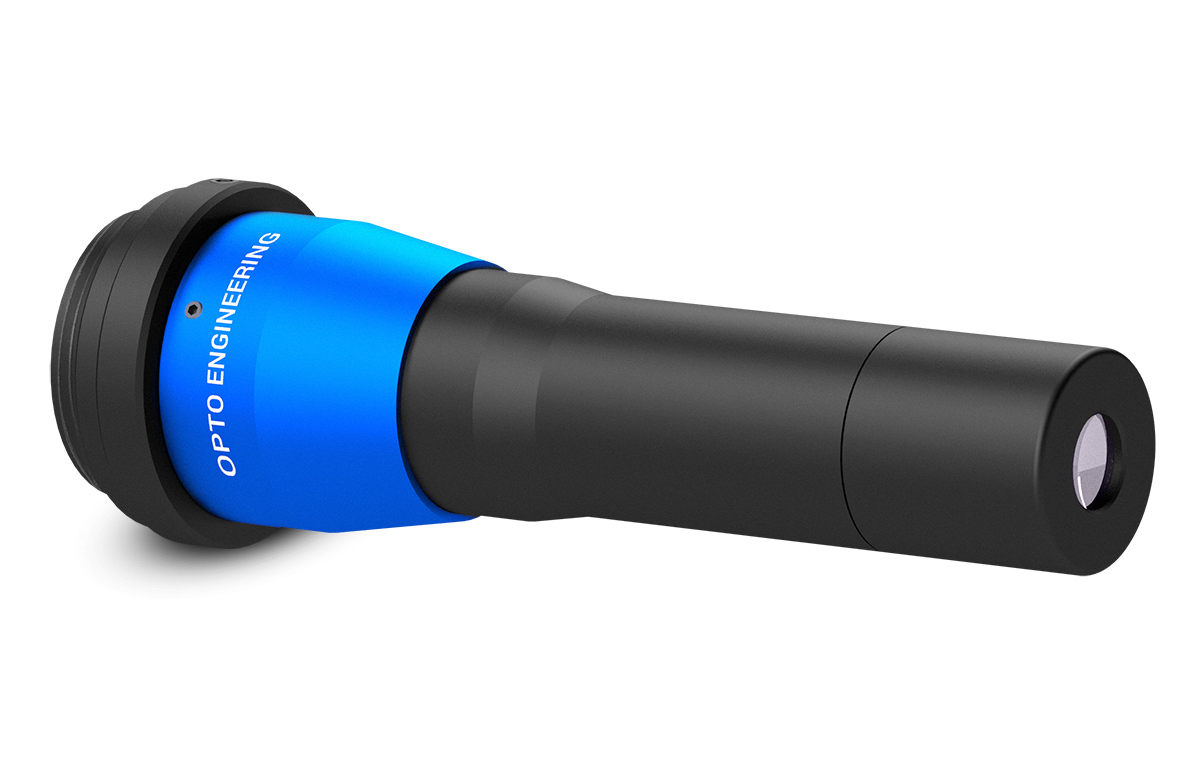
Inspecting inner surfaces and complex components, such as threaded holes, internal conduits, and microcomponent cavities, poses numerous challenges for industry operators. Key difficulties may include reduced accessibility, complicated lighting, limited FoV, complex integration in inline vision systems. Indeed, small size and depth of inspected holes can prevent standard imaging solutions from capturing adequate images of defects. Conventional optics do not provide a clear and uniform view of the internal walls of holes. In addition, light distribution within narrow cavities can be problematic, causing unwanted shadows and reflec-tions and issues in illuminating fea-tures of interest. These challenges often lead to manual sampling inspections or the adoption of unoptimized imaging solutions that can hinder inspection and high-speed requirements.
Nano Hypercentric Lenses
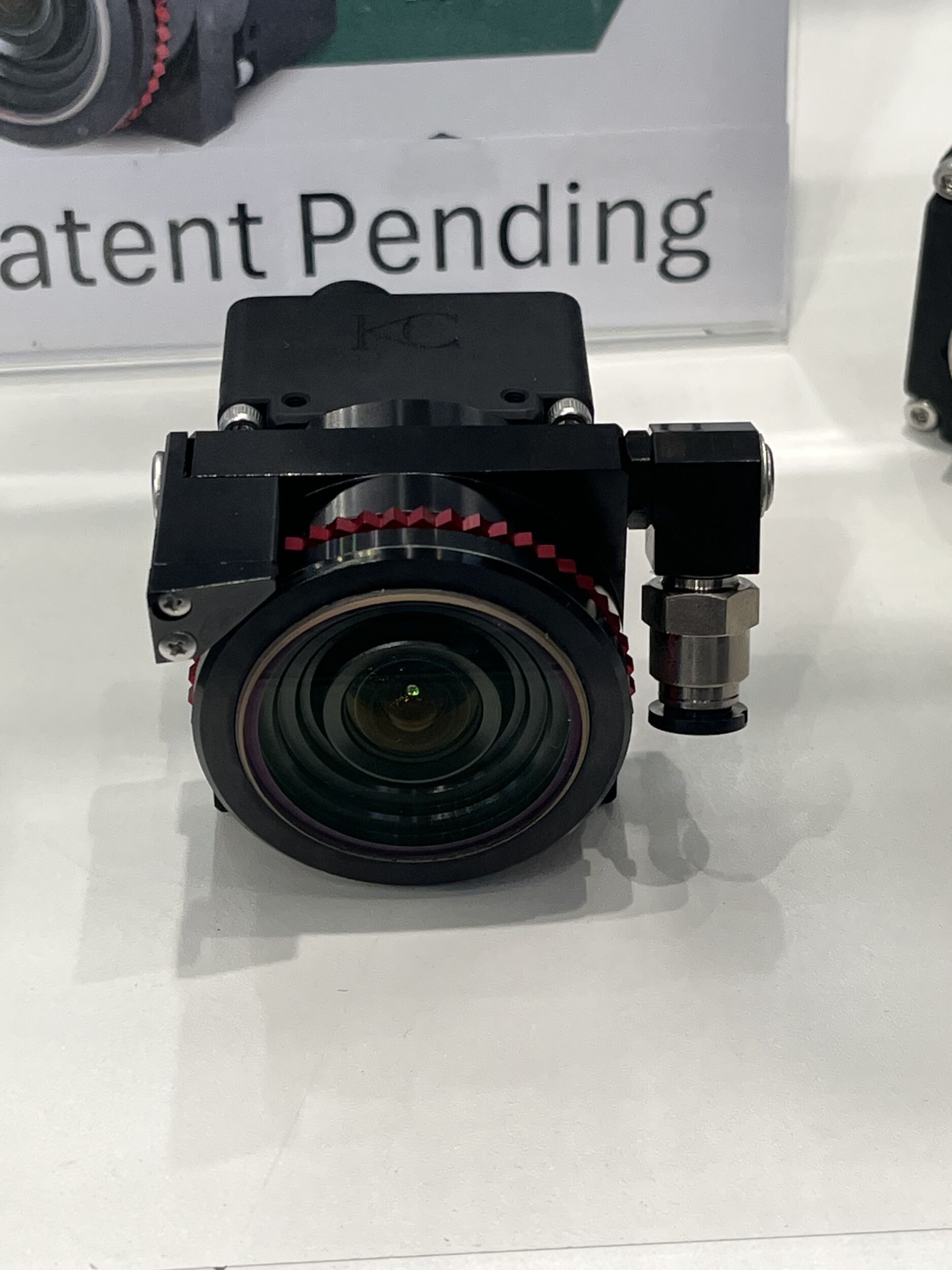
The new nano hypercentric lenses from Opto Engineering (Image 1) are specifically designed to address and overcome the abovementioned issues, enabling detailed imaging of small objects with unprecedented quality. Leveraging the advantages of 360° view optics, this patent-pending solution allows complete inspection of small cavities with just one camera and in perfect focus, reducing inspection times and the amount of hardware required in the vision system while improving quality control reliability. Some of the important features of the new lenses include: OptoMedias ultrakompaktes Mini SFF bringt zuverlässige, schnelle Glasfaserverbindungen in Industriekameras der nächsten Generation. ‣ weiterlesen
Fiber Mini SFF für GigE Vision
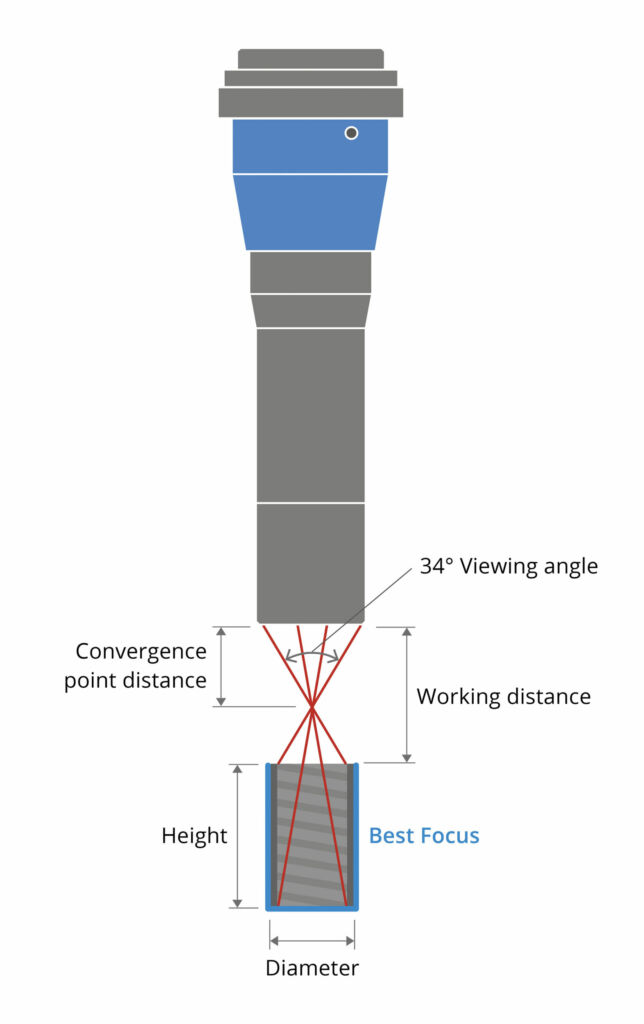
- Inspection of small hollow parts: Thanks to the optical design and a cylindrical FoV, cavities with diameters ranging from 0,75 up to 10mm can be inspected.
- Perfect focusing of the entire inner surface: Both the inner vertical walls and the bottom of small cavities are simultaneously imaged at high-resolution (for both blind and through holes; Image 2).
- Inner inspection of cavities from the outside: There is no need to insert the optics inside the cavity to image its inner surfaces.
- High depth of field and flexibility: Cavities featuring different shapes and sizes can be imaged by the same lens. The special optical path of the rays collected by these lenses allows inner inspection of parts bypassing any bottlenecks or narrow openings at the top.
- Space-saving and cost-effective solution: Get a 360° view image with just one camera and one lens, avoiding complex and expensive systems.
- Industrial compact design compatible with high-speed inline inspec-tions: The hypercentric design en-sures that these lenses operate at a sufficient distance from the object to perform inline inspections, even at high speeds.
- Matching LED ring light: A special-ized LED illuminator (LTRNHCNW) was designed to match HCN nano hypercentric lenses, ensuring uniform optimized illumination across the entire cavity depth.
Two models, designed for 1/3″ sensors and optimized for different object diameter ranges, are available to meet diverse needs: HCN13040 is opti-mized for the inspection of diameters from 2 to 10mm while HCN13010 is a highly specialized lens developed for the inspection of diameters from 0.75 to 2mm. By combining HCN nano hypercentric lenses with other Opto Engineering products, customers can achieve a full 360° inspection solution that enhances inspection quality and optimizes production efficiency.

Thanks to their versatile design, HCN nano hypercentric lenses can be used in various industries (Image 3) to perform inspections. They are ideal for sectors such as electronics, precision mechanics, biomedical, and aerospace, where inspecting microcavities is essential for maintaining high-quality standards.