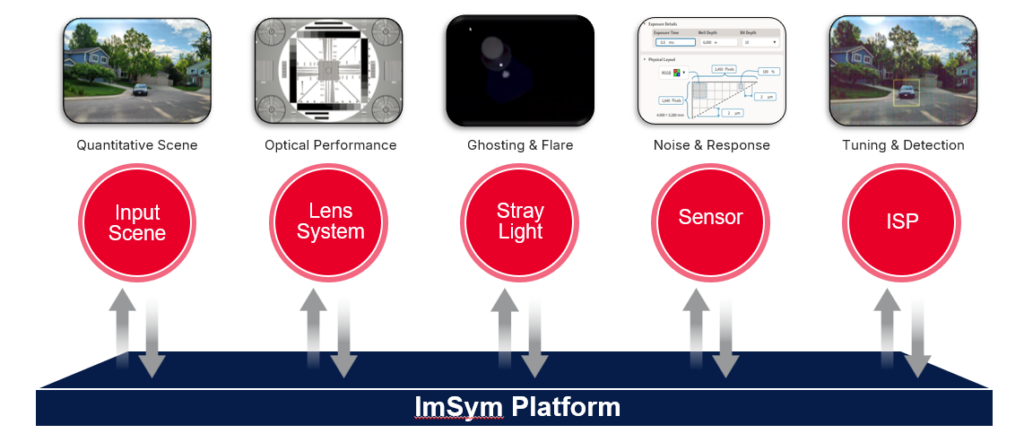
ImSym integrates optical data from Code V and LightTools into a unified simulation pipeline that accurately represents lenses, sensors, stray light, color processing, and ISP operations. Teams can simulate real-world inputs using any scene object and generate radiometrically accurate output images to evaluate system-level performance long before prototypes are built. The platform also supports Python-based customization, enabling engineers to test their own image processing algorithms directly within the simulation environment. From tuning ISP modules to studying sensor noise and relative angular response, the platform gives engineers full visibility into how each component contributes to the final image.
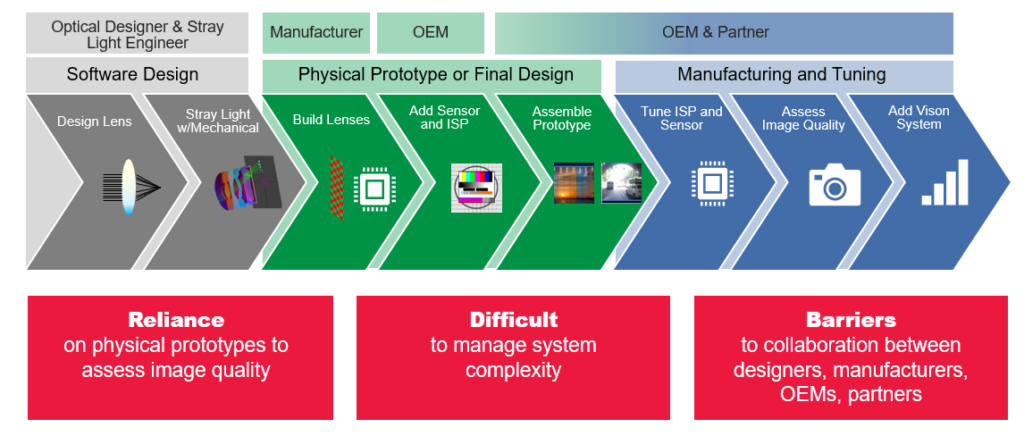
The Problem with Hardware-First Imaging Development
Most camera and imaging pipelines today rely heavily on physical prototypes to measure image quality. While necessary, this approach introduces several limitations like long prototype manufacturing cycles delay discovery of system-level issues; redesigns late in the process can impact cost, schedule, and yield; optical, sensor, mechanical, and ISP teams often operate in silos; complex interactions – such as stray light or image processing artifacts – can’t be evaluated early; hardware dependencies slow verification of key requirements or iterations accumulate expenses across development phases. These challenges make it difficult for teams to maintain consistent timing, control costs, and meet performance requirements. Simulation offers a more efficient path.
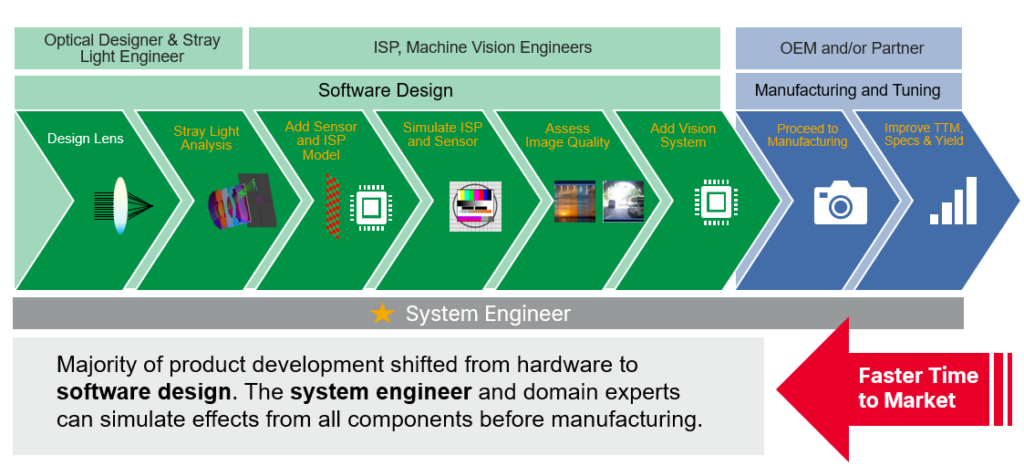
How ImSym Shifts Verification Left
ImSym makes it possible to verify imaging performance earlier by simulating the entire optical-to-digital pipeline. Instead of waiting for prototypes, system engineers can eval-uate lens performance, distortion, ISP behav-ior, and overall image quality directly within the platform. This shift enables organizations to validate system and subsystem requirements before hardware is built; test and refine ISP algorithms using simulated sensor data; identify image-quality issues virtually and correct them sooner; reduce costly prototype cycles and avoid late-stage redesigns and improve alignment across optical, sensor, and system engineering teams. By integrating a virtual imaging pipeline into the systems engineering process, teams gain the ability to gate hardware builds based on simulation results.
Correcting Distortion without a Lens Redesign
In our example scenario, a lens system meets all performance requirements except distortion. Significant barrel distortion caused corner features, such as faces in a test image, to appear unnatural. Redesigning the lens would jeopardize schedule and cost commitments, making it an impractical option. Using ImSym, the engineering team: