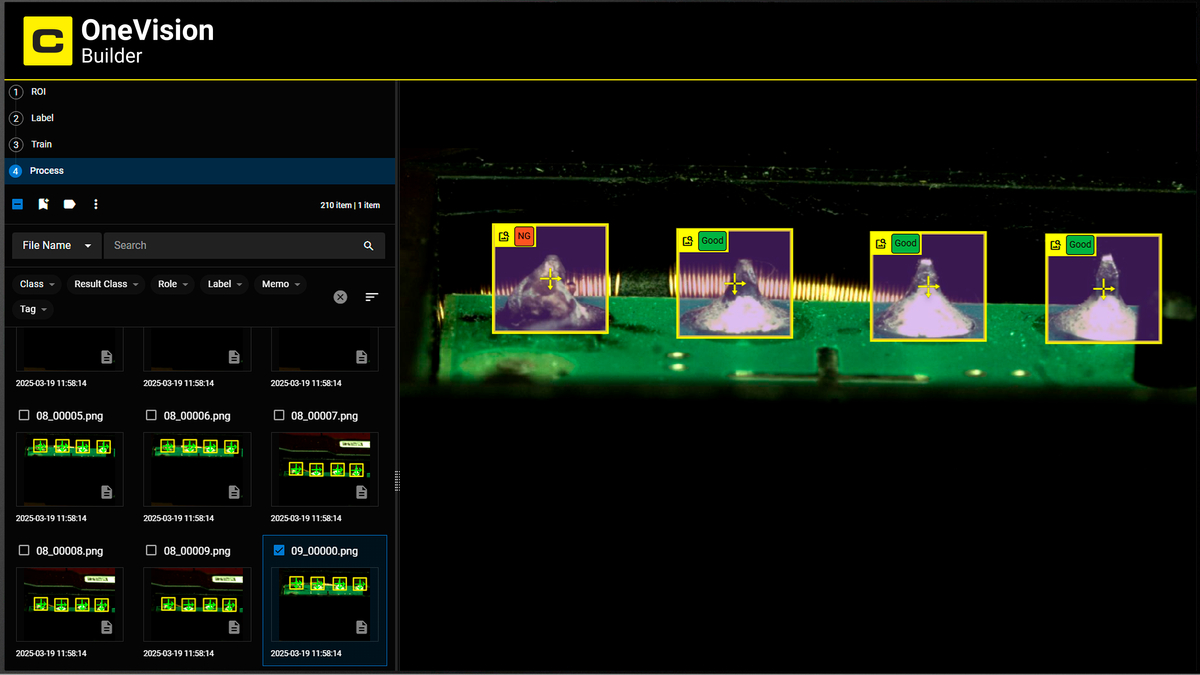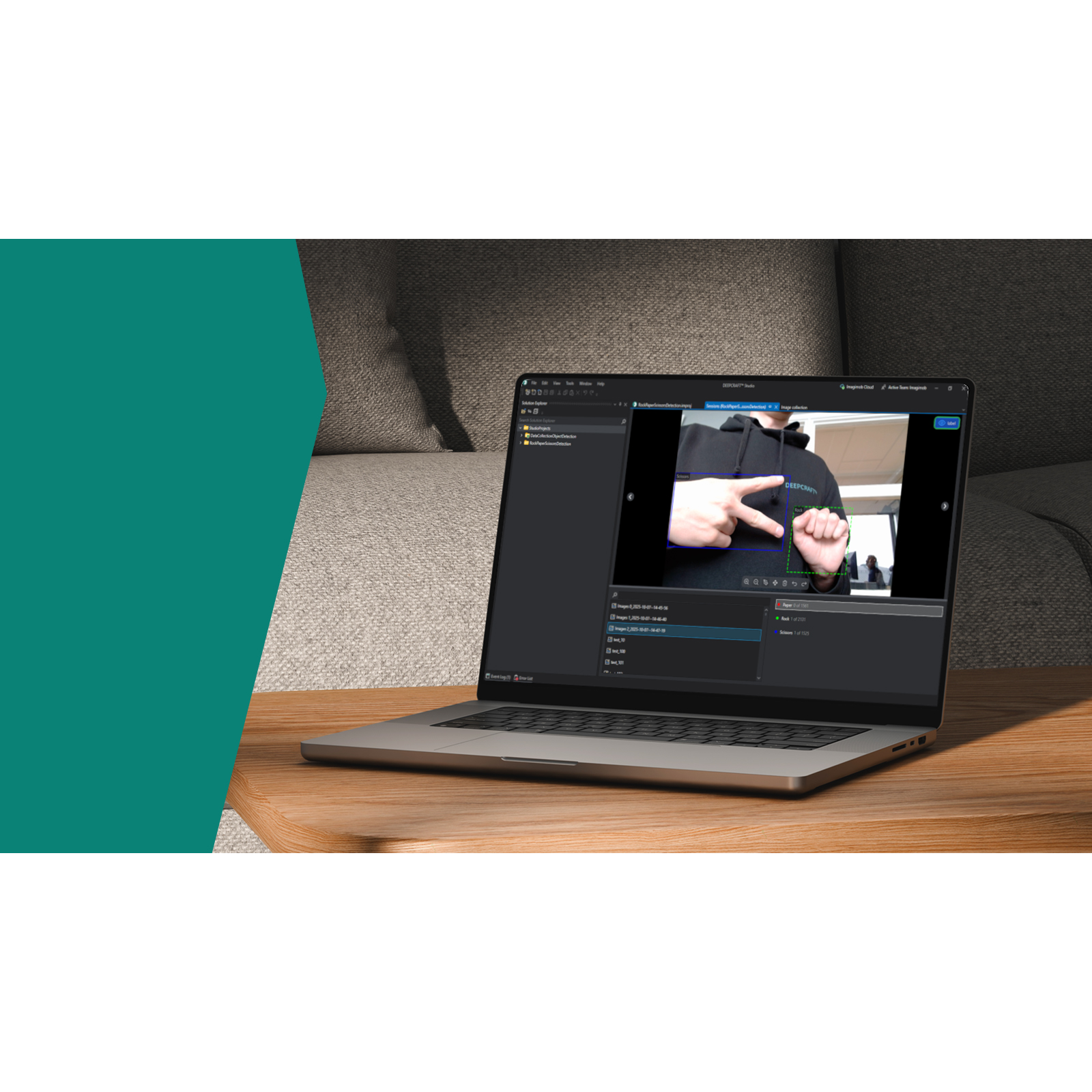
What if a machine vision system could be tested before a single component is purchased? What if thousands of defect images could be generated without a single physical sample? And what if setting up a virtual camera system were as simple as a conversation? Medabsy is addressing exactly these questions with two major additions to its platform: the Pro Version and Vision Navigator.
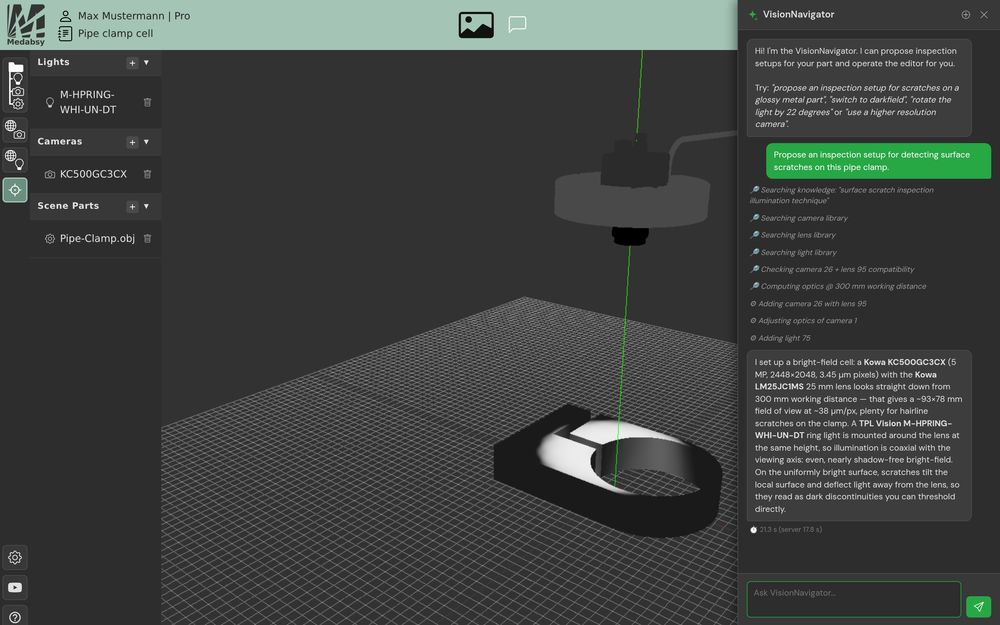
From virtual previews to production-ready datasets
The Light Version creates preview images for evaluating a machine vision setup. The Pro Version goes further and generates complete synthetic training datasets of photorealistic images, hundreds to tens of thousands of them. These images are not AI-generated: they are computed from a mathematical model of scene, material, defects, camera, optics and illumination, so no real dataset is needed to create one. This fundamentally changes the AI inspection workflow. Real-world training data is one of the biggest bottlenecks in AI project: engineers wait for production samples, deliberately damage parts or hunt for rare failure cases. Some defects are simply too rare to collect. Simulation offers a way out.
Defects on demand
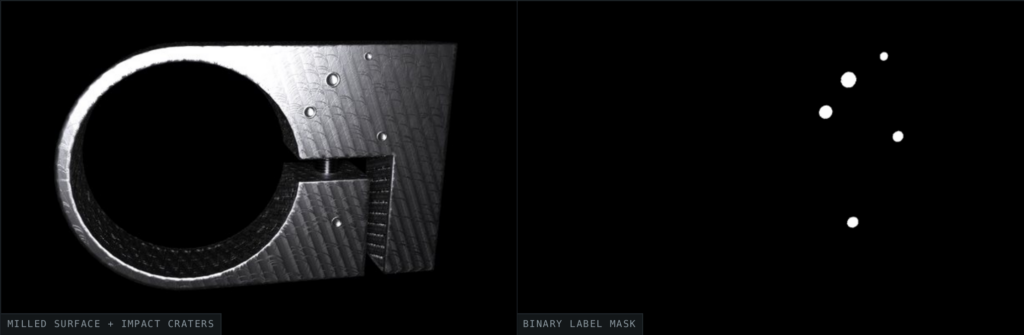
Defect simulation is the Pro Version’s standout feature. Defects are placed directly on the virtual parts, with full control over size, shape, variation and position. Engineers can generate the scenarios their AI model actually needs, not the ones the production line happens to deliver. It is up to the users to decide what they want: rare defect types, extreme contrast, poor lighting, unusual part positions or several defects in one image. All created deliberately and in any quantity. Each defect image comes with pixel-perfect labels, removing most manual annotation work and introducing label consistency. The result is a controlled pipeline from virtual scene to synthetic training dataset.
Realism matters
Synthetic data is only useful if it reflects reality and can be trusted. Here, realism comes from physics, not generative AI: every image is rendered from mathematical models of light, optics and sensor behavior, not inferred from existing photographs. Generative models cannot be fully constrained or generalize beyond what they have seen, so their output may contain artefacts (hallucinations) that never occur in the real scene. A physically simulated image contains only what was defined in the setup, making the dataset deterministic, reproducible and auditable. This is where the two versions differ: the Light Version delivers preview images for first setup evaluation such as camera field of view and light coverage, the Pro Version delivers images realistic enough for evaluating defect visibility and performing AI training. With it, when designing a system, it is possible to move from „Will this camera system work?“ to „How will it perform across thousands of realistic scenarios?“ But between simulation and a real system lies one more hurdle: documentation. The Pro Version generates it automatically: bills of materials, technical drawings and data sheets, straight from the virtual design. That way the virtual model becomes the starting point for engineering and physical integration.