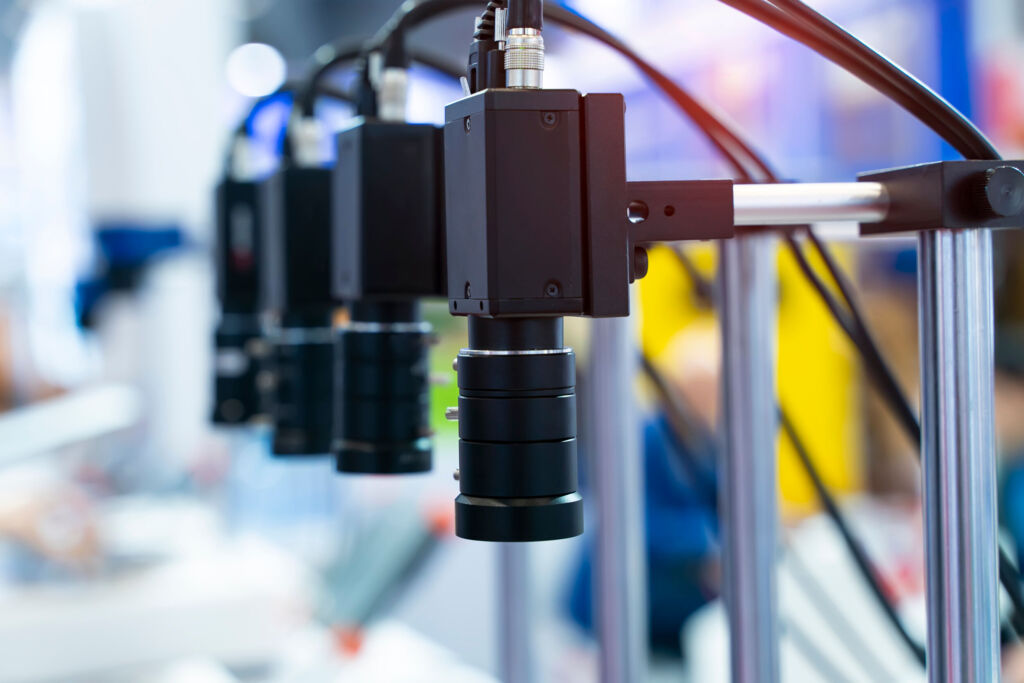
Every CMOS designer knows the classic shutter trade off. With a rolling shutter, exposure progresses line by line across the array: pixels stay simple, sensitivity and noise performance are strong, and HDR implementation is relatively straightforward. The downside is that fast motion or flickering light cause the familiar skew and jello artifacts because different parts of the frame are captured at different times. A global shutter does the opposite: all pixels integrate over the same time window, then transfer charge into in pixel storage before readout, preserving geometry and synchronising cleanly with strobed or flickering illumination. The price is extra circuitry and some loss in sensitivity or dynamic range. Until now, engineers had to pick one behaviour early in the design and then shape optics, illumination and processing around that essentially immutable choice.
Hybrid Shutter Innovation
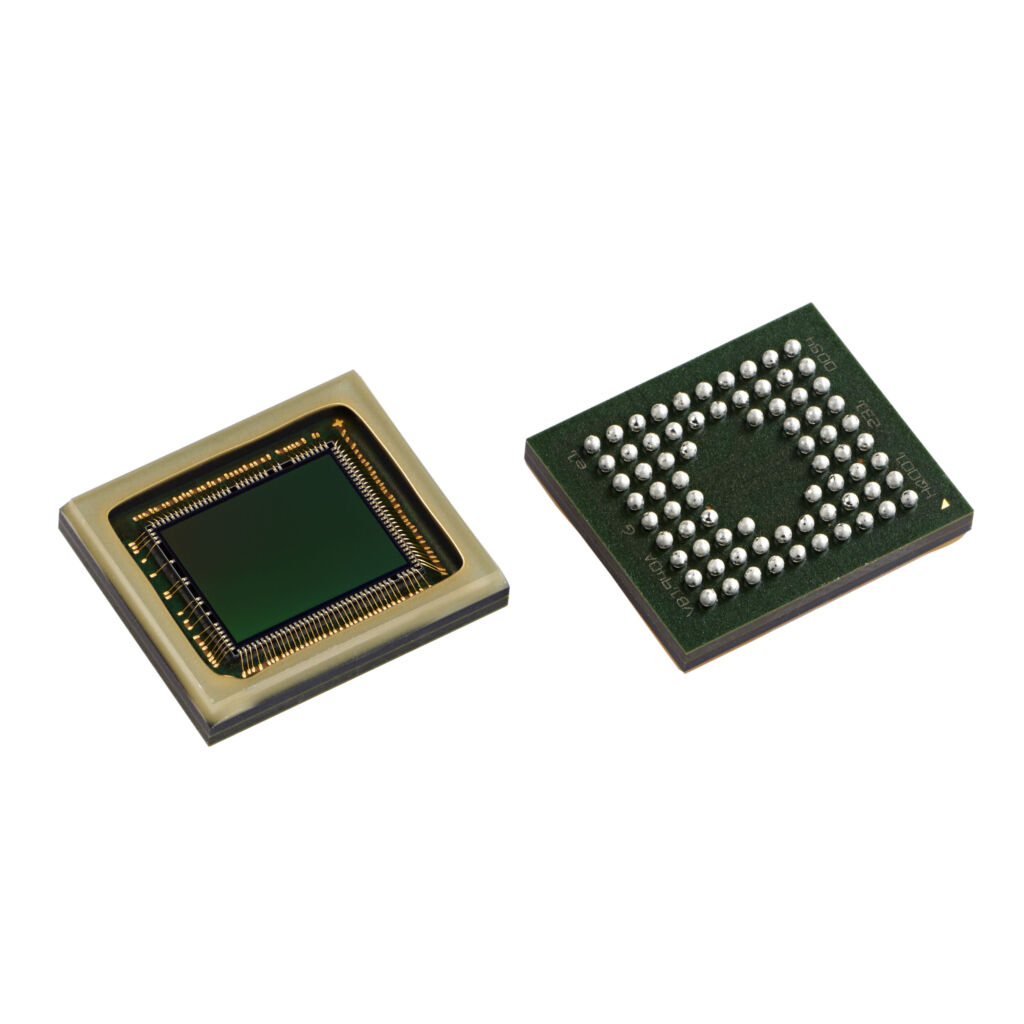
The VB1943 and VD1943 image sensors challenge the traditional shutter trade off at the pixel level. Here, shutter mode is no longer a one time choice in silicon but a parameter that can be changed at runtime. Inside a 2.25µm pixel, ST has implemented a hybrid structure that operates either as a true global shutter or as a high performance rolling shutter, with the mode selected via registers on a frame by frame basis. In rolling shutter mode, the pixel follows a streamlined photodiode path optimised for sensitivity, noise and high dynamic range; in global shutter mode, all pixels integrate simultaneously then transfer charge into in pixel storage for distortion free motion capture and precise control of strobed illumination. For system designers, shutter behaviour becomes part of the control loop instead of a fixed constraint, and this dual-mode capability is achieved without increasing die size or sacrificing fill factor, making it well suited to compact, high resolution embedded and industrial designs.
On-chip RGB-IR intelligence
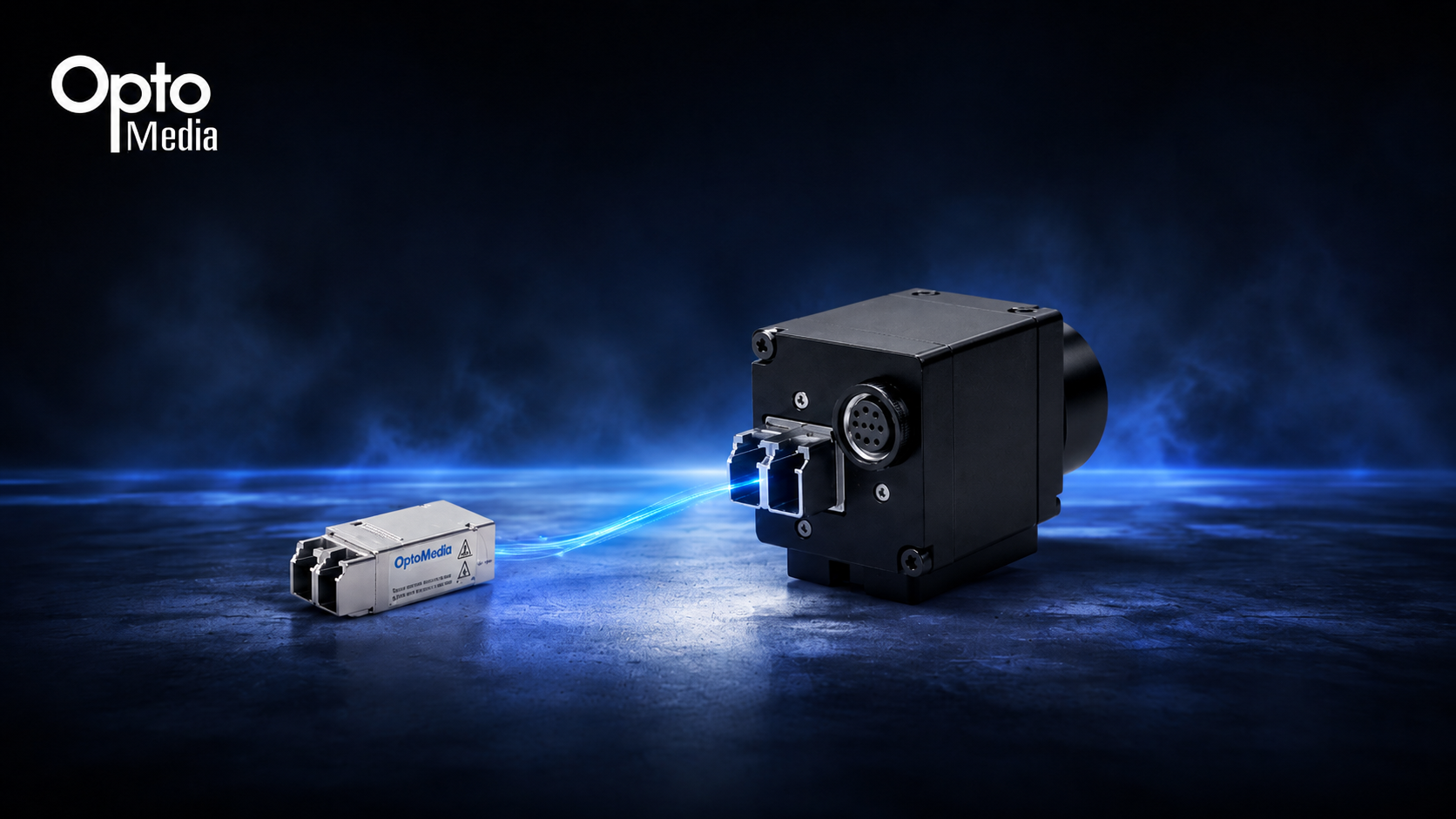
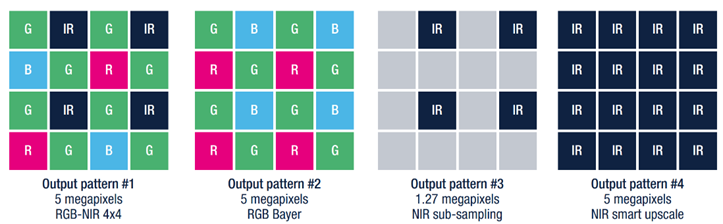
Beyond the shutter architecture, Vx1943 sensors also address one of the toughest practical problems in multispectral imaging: making RGB IR truly usable without a heavy external ISP. Using a 4×4 RGB-IR colour filter array with dedicated NIR pixels, the sensors perform the key processing steps directly on chip, enabled by an advanced 3D stacked structure that combines a 65nm pixel wafer over a 40nm logic wafer. OptoMedias ultrakompaktes Mini SFF bringt zuverlässige, schnelle Glasfaserverbindungen in Industriekameras der nächsten Generation. ‣ weiterlesen
Fiber Mini SFF für GigE Vision
On the logic layer, the device first executes RGB IR separation: instead of delivering a mixed mosaic, the sensor itself splits visible and NIR information. During this step it also performs ‚RGB cleaning‘ by estimating the NIR contribution seen by the R (and partly G) pixels from neighbouring pure IR samples, subtracting that IR component, and reorganising the corrected data into a standard RGB Bayer pattern. The result is an IR corrected colour stream that feeds conventional ISPs with far fewer colour shifts under IR rich lighting and less reliance on aggressive IR cut optics.
In parallel, a dedicated NIR pipeline runs ST’s patented Smart Upscale algorithm, fusing measurements from the dedicated IR pixels with the IR content present in RGB sites to reconstruct a full resolution 5MP NIR image. Because this operates on the raw RGB IR mosaic on the 40nm logic layer – before any generic demosaicing or resampling – the sensor preserves edges and fine structures, delivering up to roughly twice the perceived NIR sharpness compared to simple host side interpolation. The device can thus output clean RGB and high detail NIR as separate, ready to use streams, greatly simplifying multispectral camera design.
A look ahead
As machine vision shifts from ‚pictures for people‘ to ‚data for machines‘, sensors like the VD1943 and VB1943 can do more than raise specifications, it can reshape system architecture. A front end that switches shutter mode on demand, delivers single frame HDR, and outputs both clean RGB and full resolution NIR directly from the chip enables designs that were previously too complex or costly. These include stereo and structured light rigs with simpler optics, compact biometric terminals combining high quality face capture with IR based liveness detection, lightweight drones performing real multispectral analysis, and day to night traffic or security cameras that no longer need dual imager stacks. For engineers, this reduces integration pain and shifts differentiation toward algorithms and system intelligence. For the market, it sets a new baseline for what a single image sensor is expected to deliver in next generation machine vision products. Both sensor families are already available for evaluation and samples.