Growth markets typically offer more opportunities for innovation, new products, and new entrants when compared to those where demand is saturated – here established companies must simply compete for market share. Startups looking to enter saturated markets will face significant hurdles to be successful. Conversely, in a growth market, startups can often identify opportunities and gaps where customer needs are not yet perfectly met and consequently find a receptive audience for early customers engagements and their go-to-market strategies. This has certainly been the case in the history of machine vision.
A Successful History of Vision Innovations
When viewed through the lens of history, as the market grew over the past three decades, several broad themes can be identified from new entrants. Combined, these have created the comprehensive ecosystem of products, solutions, and tools that enable an almost infinite variety of vision applications to be solved.
During the late 1980’s and 1990’s many new vision companies were formed, seeking to develop simple-to-use industrial cameras at price points that allowed scalable deployment. Many have now become established and recognized market leaders with a global presence. During this time dramatic developments in CMOS image sensor technology, provided the foundation for high-performance, integrated, digital imaging. Many image sensor design houses were formed and subsequently acquired, and CMOS image sensors opened the path for more companies to easily create industrial camera designs and enter the market.
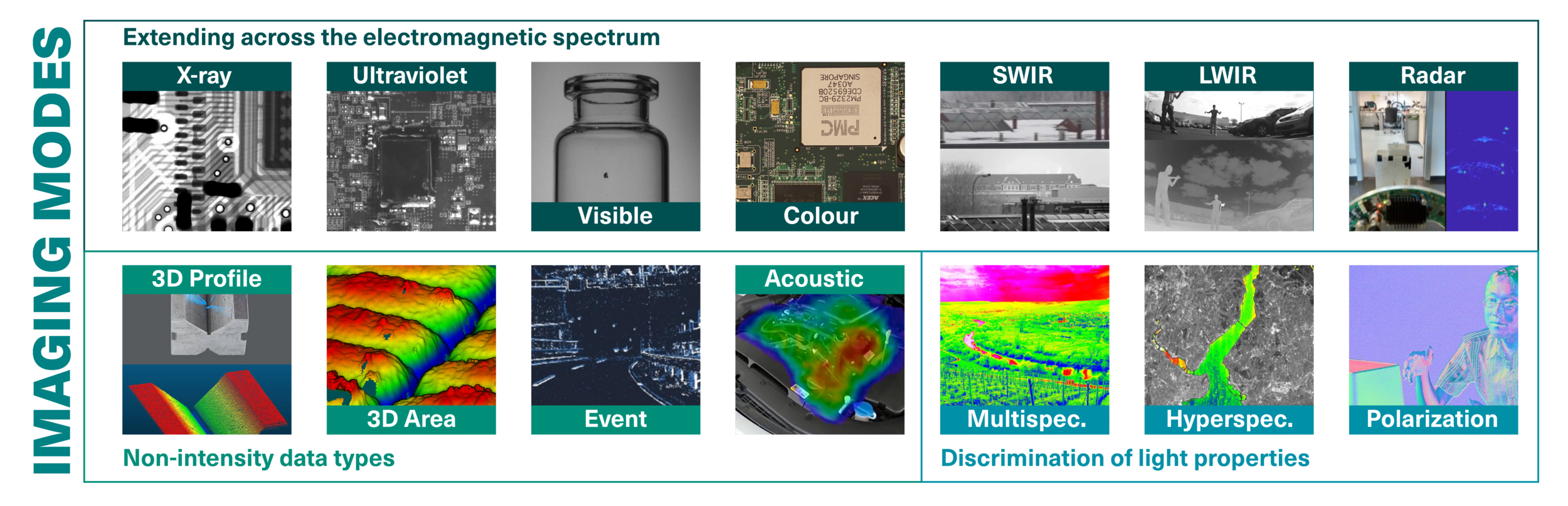
Other startups recognised the importance of software for developing and maintaining industrial vision applications and created dedicated machine vision software libraries and tools to meet this need. As the 2000’s progressed, several companies also started to extend 2D vision to the 3D realm, developing laser profile scanners, stereo cameras, time-of-flight cameras and structured light systems, now a well-established growth segment of vision tech. In the last decade the rapid rise of AI vision has been a fertile area for startup companies. The combination of freely available GPU compute and the ability of AI to detect complex defects has enabled many new applications. Today, there is no shortage of new companies entering the vision tech market, nor of exit opportunities for companies that have successfully recognised and addressed the needs of customers.

Finance and Planning is Critical for Growth
Many factors are required for a startup company to be successful, beyond a clear market demand and innovative technology. Effective teams, the ability to navigate the inevitable challenges, and access to cash to invest in bringing a new product to the market, all impact the chances of success for a new company.
Deciding how and where to secure finance is a critical decision for many founders. At one end of the spectrum many startup companies undertake custom projects for their first customers. This has the advantage that important market knowledge is obtained at an early stage through a paying customer, and control of the company remains with the founders. However, the ability to scale a new product can be limited by the available free cash within the company.
Young companies typically do not have either the assets or trading history to be considered for bank debt. For this reason, the most common source of growth capital is from external investors buying shares in the company. Today there is a well-established ecosystem of investors, including individuals, angel funds, and venture capital funds, many of whom have experience of the vision tech market. At the same time startups are often supported by regional accelerator programmes and incubators to guide them through the process of raising investment.
Securing investment provides capital to accelerate growth, as well as strategic guidance from experienced investors, but also means that the founders often need to actively plan for a sale of the business in the future, to provide a financial return for investors. Companies are acquired at different stages of maturity and for different reasons, including access to new technology or products, expanding the buyer’s scope of business operations, and to enter new markets, but in each case a company sale requires careful planning and relevant advisory services to ensure a smooth process and desirable outcome for all stakeholders.