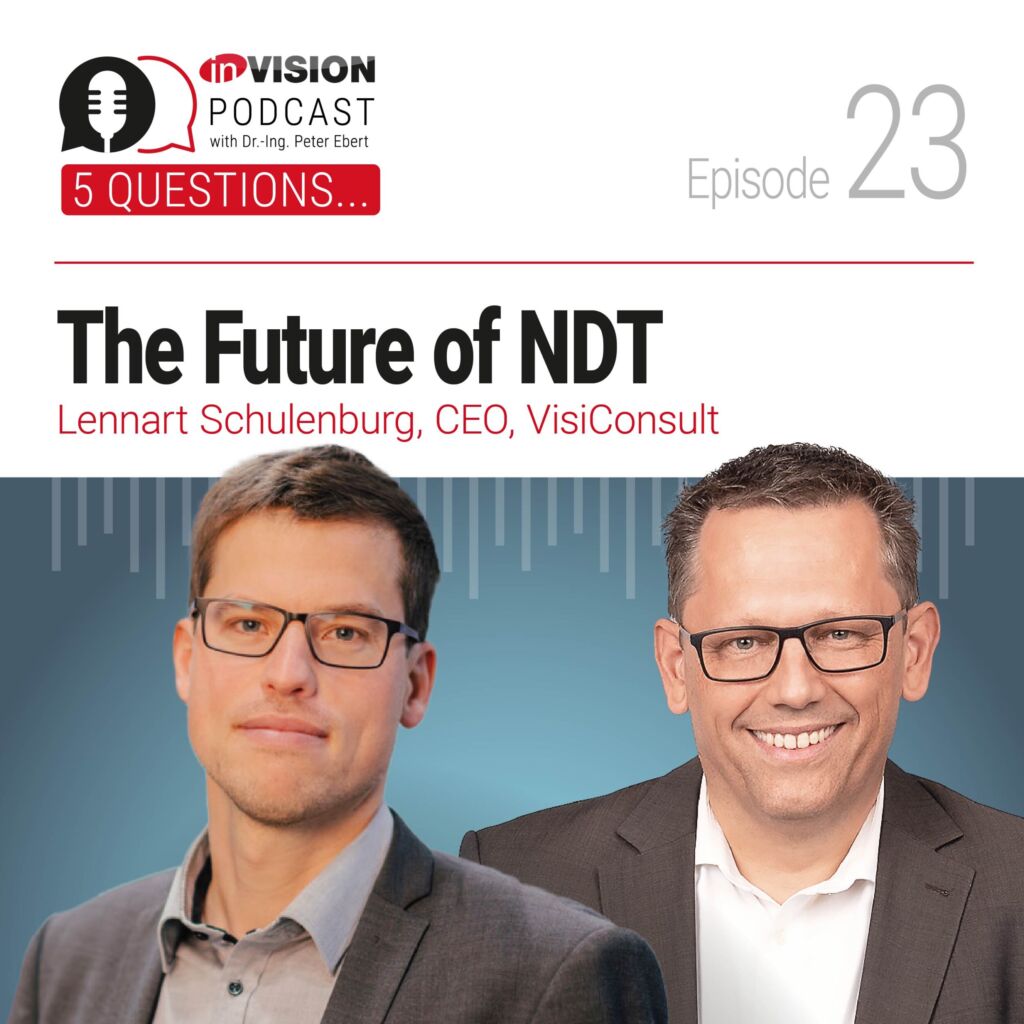
Lennart, what exactly is visiconsult doing and how is your business currently going?
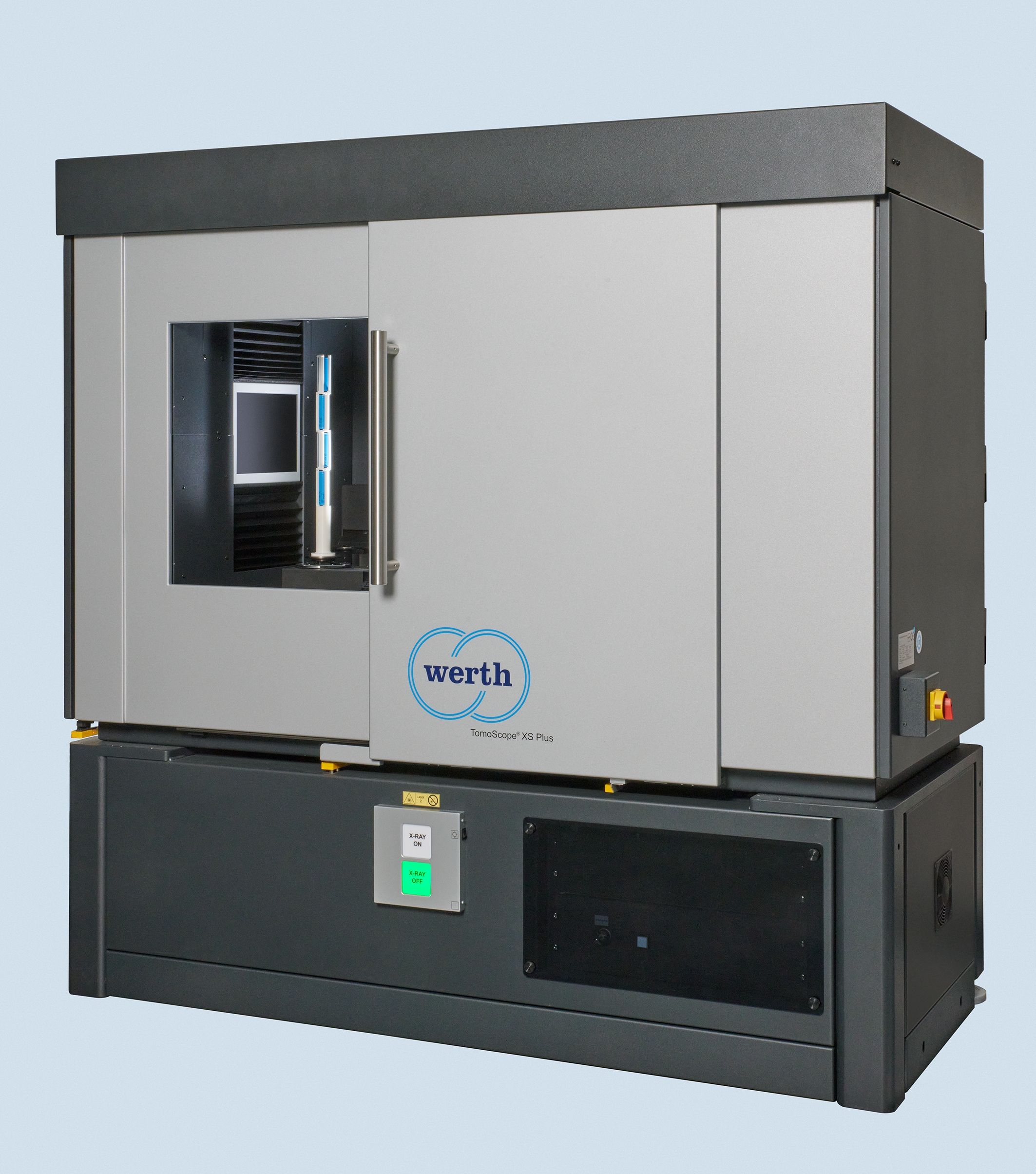
Lennart Schulenburg: We are a German company located in northern Germany with subsidiaries all around the world. Our main focus is to build industrial X-ray systems, inline 2D inspections systems, computer tomography systems, data collection databases like server solutions and business intelligence tools to evaluate these data, and ultimately also AI solutions that are automatically interpreting the data and business. Our business is growing very strong and we are growing really fast. We hired seventy seven new colleagues last year and I think we are the fastest growing company in the NDT space because our automated solutions, and especially our AI tools, are in very high demand these days.
You mentioned AI. So what role does AI play in NDT today?
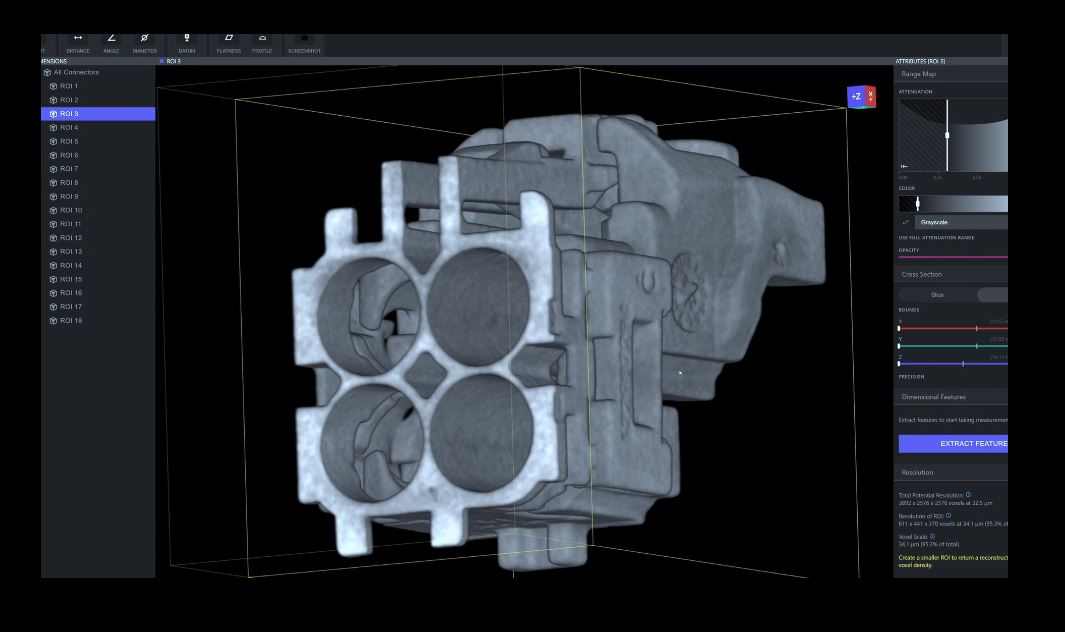
If I look at AI in our company, we use it in many areas for productivity and to increase quality, from marketing to design to software coding. But the most exciting part is how we use it for our products. We have our own AI team which is focusing on labeling data, creating AI model pipelines, and building AI tools for our customers. The main driver here is the lack of skilled labors. In NDT you typically need people with level 2 or 3 to perform certain inspection tasks because it’s a regulated inspection. But these people are hard to find. It’s not that our customers are looking at replacing humans with computers. It’s more that they don’t find enough humans to do the work that has to be done. This is where AI comes into play to evaluate images and to find indications like porosities, inclusions or cracks and then segment, size, annotate them, and feed them to an AI decision tool.
„The improvement in cycle time is roughly 50 to 60 percent by applying AI tools as an assistant tool.“, Lennart Schulenburg, visiconsult
Do you get better results using AI in your X-ray systems?
That’s a great question. Obviously most people think mostly about efficiency, to make things faster. That is obviously a main driver of implementation. The improvement in cycle time is roughly 50 to 60% by applying AI tools as an assistant tool. If you are applying it as a fully automated tool, then you even exceed this percentage range. What is even more exciting is that the quality is increasing, because if you look at the currently very like human driven process of manual inspection, the variance is quite high because you, Peter, might decide different than I do, because you have a different background or experience. This is where an algorithms can help to reduce the variance in an inspection process and improve inspection quality. We have shown roughly 20 to 25% improvement in evaluation performance quality.
What trends do you see for NDT?
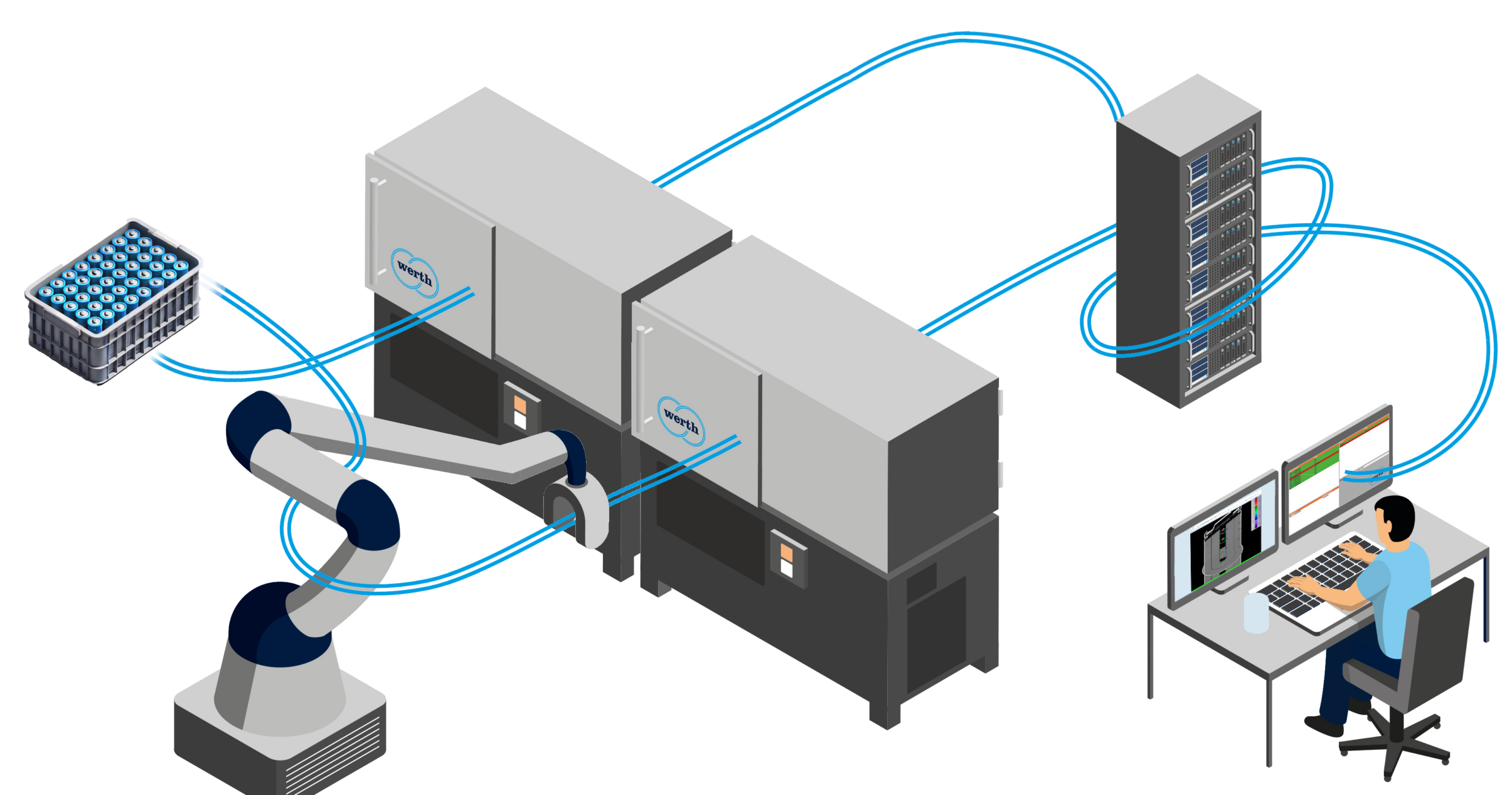
AI is the predominant driver, not only in NDT but also in society or all our industries. But there’s another big trend, which is robotics. AI is automating the digital work, and robotics are automating the physical world, manipulating, feeding and moving parts around. That is a massive driver of efficiency and quality as well because similar to the digital world and evaluation, humans are hard to find to do the laborious job of moving heavy parts around. Then we have cloud connectivity and big data. Unfortunately nowadays in quality inspection we throw away most of the data after performing our job. We receive a part and look at it, make an OK/NOK decision and we ship the part. We do not use the data for root cause analysis and for yield improvements. A lot of our customers are asking us for business intelligence tools that are giving them an insight into their quality operations so we can actually track trends, see hot spots over time, and derive information from the inspection data.
What about inline applications and NDT?
Well you’re asking the right person because visiconsult´s main focus is customized automated X-ray systems. A lot of our customers are using our systems fully integrated into the manufacturing line, which could either be an inline or an atline implementation where high volume parts like batteries, turbine blades, or casting parts, are running directly through the X- ray system. Every part gets automatically inspected without the need for human intervention and without any process risk, which is a major point in quality inspection. If I look at our business and see where does the biggest demand come from, it’s clearly coming from inline system and a high degree of automation. Manual inspection is getting less and less because companies are lacking the people to actually do the inspections.
„The next five to ten years will probably be a real transformation away from the processes as we know it to more autonomy and a higher level of automation.“, Lennart Schulenburg, visiconsult
What will the NDT system of the future look like?
During the next three to five years, we will move from the quite manual X-ray entity world that we are in today, towards a much more automated and AI driven world. We will see AI tools acting as co-pilots to assist the human in making better decisions and doing things faster. We’ll see robotics doing a lot of the handling moving parts and manipulating them, and then the data actually will be aggregated and used. So the next three years are a digitization phase, where we are moving from the physical world into the digital world, and are fully optimizing these processes.
Looking then to a five to ten years period that’s the exciting part. Once we are on the foundation of robotics, digital twins, AI systems and aggregating all that data, we can move to the next step bringing in more and more autonomy. This means we’ll hand over more and more inspection tasks to AI systems that will do autonomous decisions only supervised by humans, and maybe correct it or double scrutinized. We’ll see more and more autonomy in the robotics world. Our R&D team is working on digital twins that are automatically creating inspection trajectories. You’re only uploading the digital twin of your part into the system. Then algorithms are creating the best possible path for inspection on that part, qualifying all the standards and requirements. This is a massive game changer because you’re effectively moving away from the very engineering heavy task of setting up these systems, programs and technologies to a very assisted and automated way, which will significantly drive down the burden on the engineering teams that are already overloaded today.
This interview is based on Epsiode 23 of the inVISION Podcast ‚5 Question…‘ which you can find at Spotify, Deezer or Apple Podcasts.