Regardless of whether machine vision relies on AI, conventional image processing, or Computational Imaging, every approach ultimately operates on captured information. Consequently, improving machine vision is not only a matter of developing better algorithms. It also requires reconsidering what information should be acquired before image processing begins. Illumination defines observation conditions such as direction, wavelength, polarisation, timing, and projected patterns. By changing these conditions, different physical properties of the same object become observable, including surface geometry, material characteristics, defects, and spectral information. Illumination therefore does far more than illuminate an object. It determines what information becomes available for machine vision. This perspective represents a fundamental shift in the role of illumination. Traditionally, illumination has been regarded as a supporting component whose purpose is simply to improve image quality. In contrast, the approach proposed here considers illumination as the technology that determines the quality and quantity of information available for subsequent processing, to acquire more meaningful information before image processing begins.
Active Multi-Condition Imaging
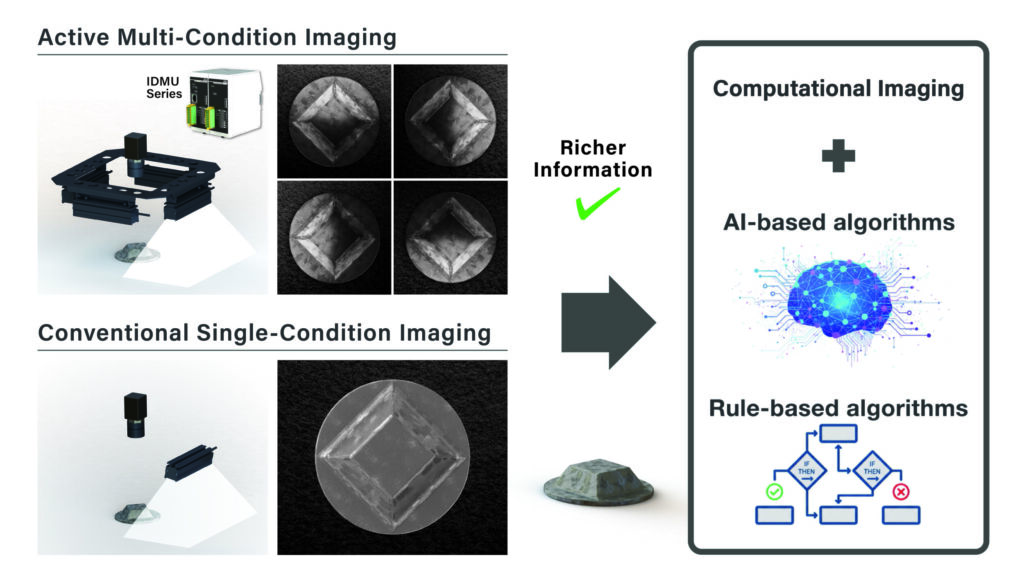
Different observation conditions reveal different information. Active Multi-Condition Imaging is based on this simple principle. Instead of relying on a single observation, it actively controls illumination conditions to obtain multiple complementary observations of the same object. The objective is not to increase the number of images, but to increase the amount of useful information available for machine vision. Many established imaging methods share this common concept. Photometric Stereo changes illumination direction to recover surface geometry. Phase-Shift Imaging projects structured light to obtain 3D shape. Multi-Wavelength Imaging changes wavelength to reveal spectral information invisible under conventional illumination. Although these techniques are often treated as independent technologies, they can all be understood as implementations of Active Multi-Condition Imaging. Viewing these methods through a common conceptual framework allows them to be discussed not as isolated techniques, but as different expressions of the same underlying principle. It also provides a foundation for future imaging methods employing new illumination modalities, sensing technologies, or computational approaches. Rather than representing another imaging method, Active Multi-Condition Imaging provides a unified framework for Designing Information before image processing begins.
From Concept to Practice
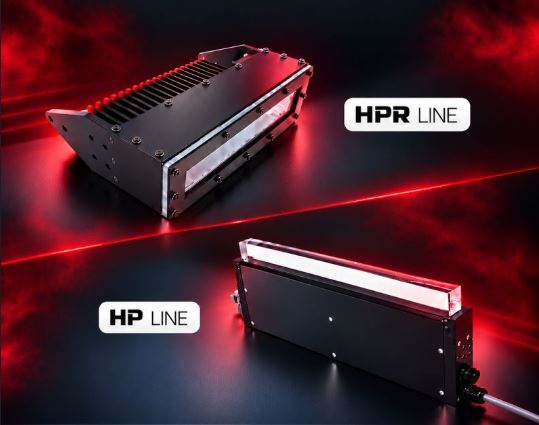
A conceptual framework becomes valuable only when it can be implemented in practical machine vision systems. Bridging the gap between concept and application is therefore essential for widespread adoption. To support this approach, Leimac has developed the IDMU Series, a high-speed illumination control platform designed for Active Multi-Condition Imaging. Through GenICam compatibility, the platform integrates with standard machine vision software such as Halcon and Merlic, enabling advanced imaging techniques to be implemented within familiar development environments. Applications such as Photometric Stereo, Phase-Shift Imaging, and Multi-Wavelength Imaging can therefore be realised using a common control architecture rather than individually developed systems. The IDMU Series demonstrates that illumination is no longer merely a lighting device. It is a practical technology for Designing Information.
Beyond Vision
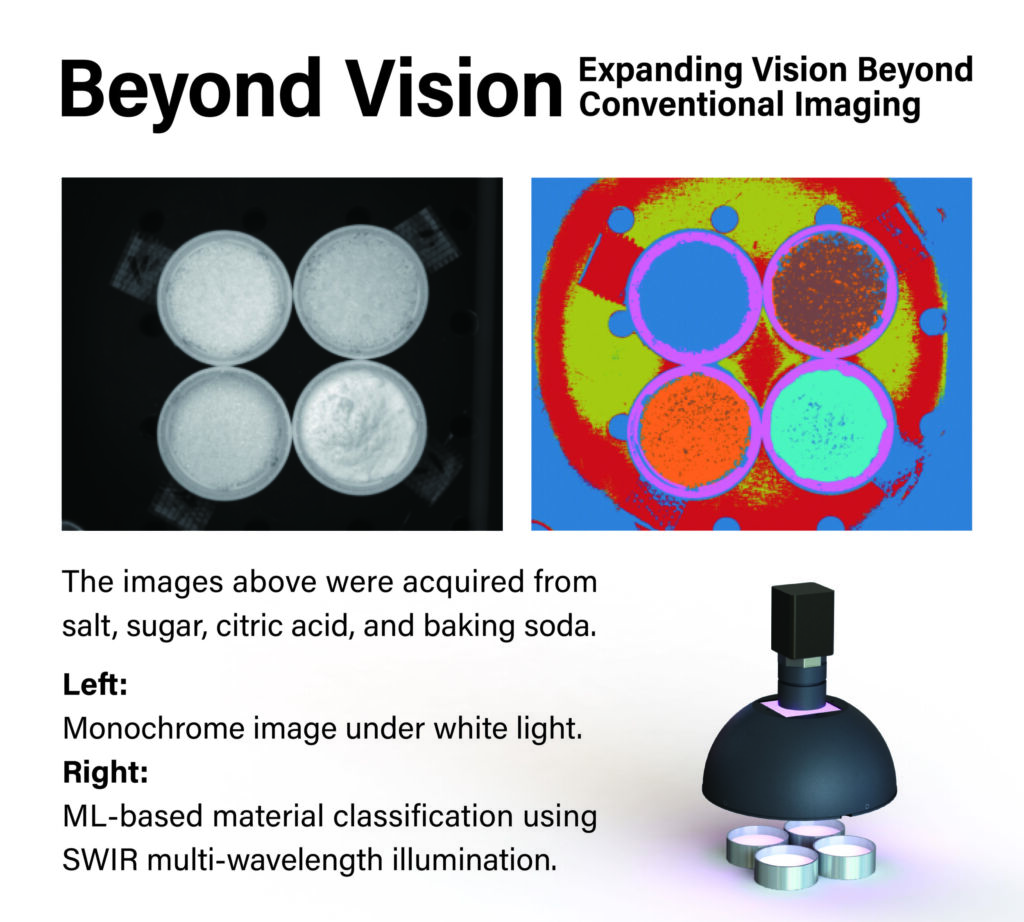
Machine vision has long sought to reproduce human vision. Human vision, however, is not its final destination. By actively controlling illumination direction, wavelength, polarization, projected patterns, timing, and other observation conditions, machines can acquire information fundamentally inaccessible to the human eye. An important implication follows. Advancing AI does not necessarily require advancing AI alone. Another approach is to advance the information provided to AI. Beyond Vision does not replace conventional machine vision. Rather, it extends its capabilities by expanding the information available before image processing begins. As imaging technologies continue to evolve, the ability to design information intentionally will become an increasingly important source of innovation.