Bild: Fastvideo LLC 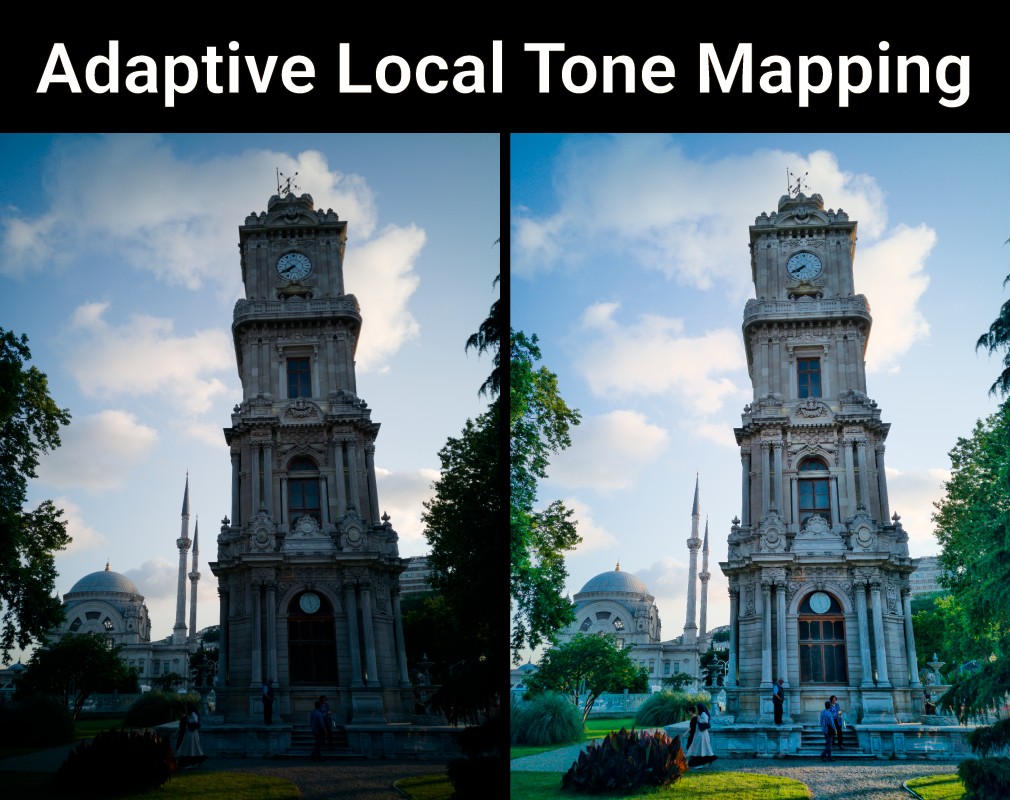
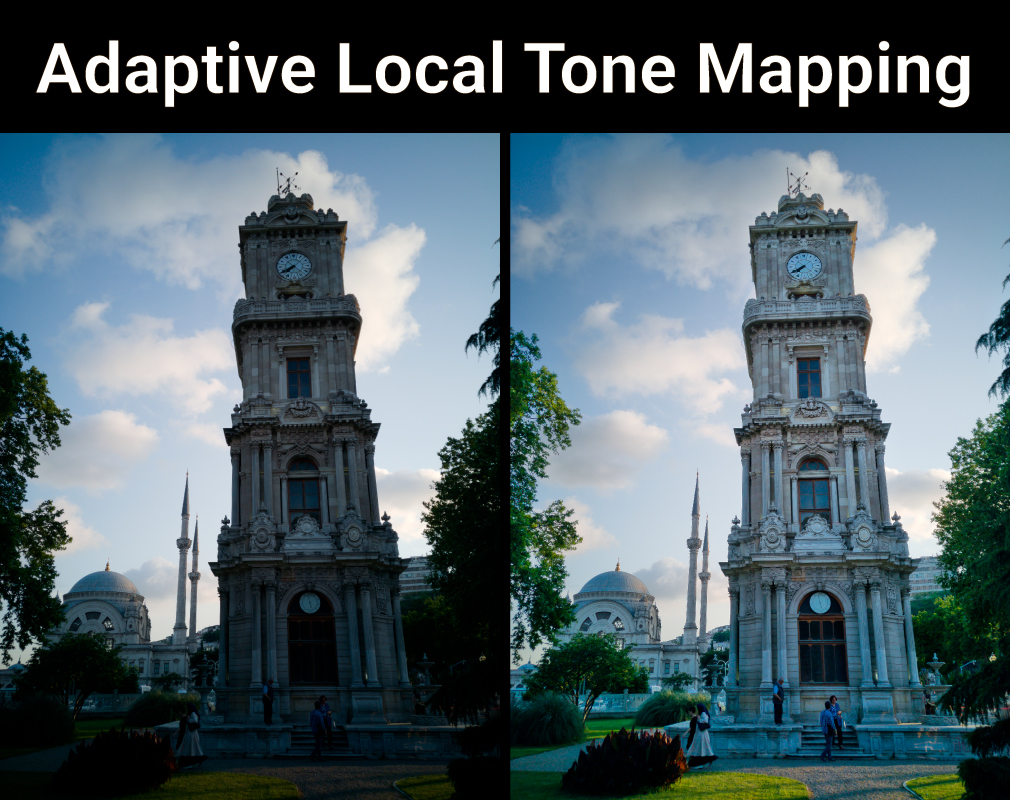
Original 16-bit TIFF image (l.); with AltMapper processed .jpg image with much better visual image quality (r.) (Source: https://hdrplusdata.org/dataset.html). – Bild: Fastvideo LLC 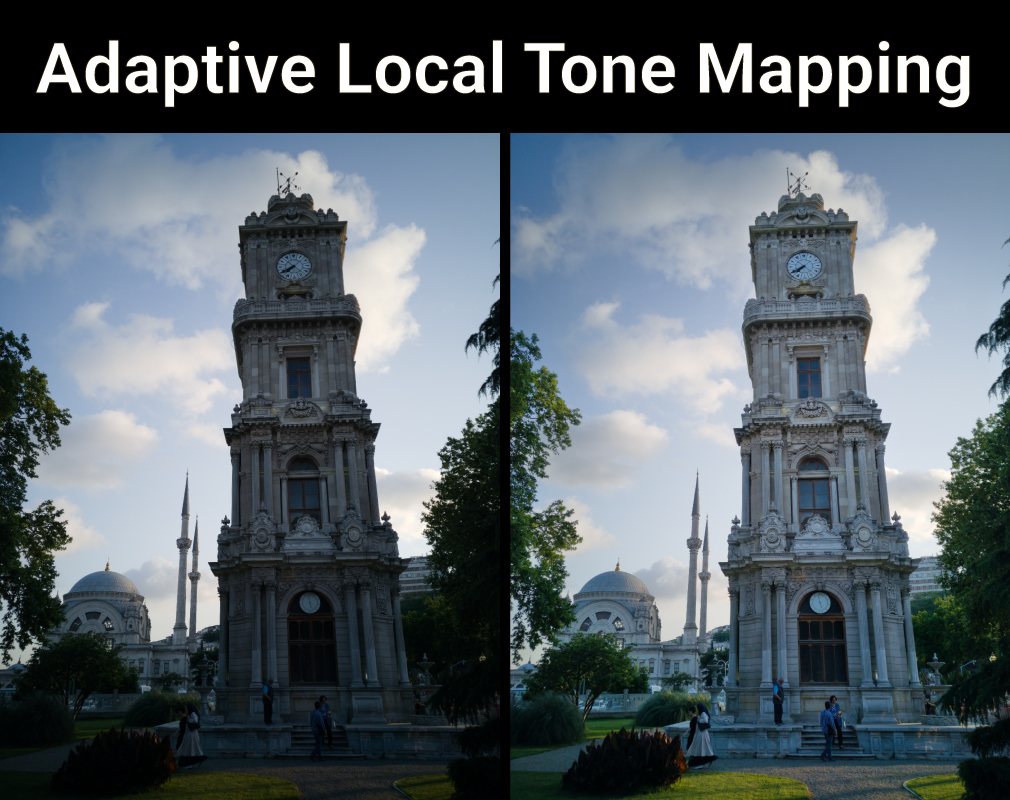
Bild: Fastvideo LLC
Normally, the camera works in ‚Exposure to the Right‘ (ETTR) mode, which means that it automatically chooses the exposure to avoid overshoot. This means that there could be a lack of illumination in the shadows and they should be improved. This is where the ALTMapper comes in. FastVideo has developed an adaptive local tone mapping engine for single-shot HDR. This is for camera and video applications because they can’t get many frames in real time with bracketing, so they have to process each frame as it is captured. It’s not only applicable to HDR or high bit depth images, but could also be successfully applied to 8/24 bit monochrome or colour jpg images to improve quality and recover shadows. The Local Tone Mapping algorithm for HDR images is based on image intensity transformations to achieve better visualisation by using information from local regions of each image. The AltMapper engine defines these local regions in each image as a grid of rectangular tiles. It processes each tile to compute local parameters to be used in further transformations. FastVideo minimises this set of parameters to achieve very fast processing. Finally, they use the local and global parameters to create a set of local tone curves and transforms that are applied to each pixel of the image. On the left is the original 16-bit TIFF image, which is difficult to view on an 8-bit monitor due to its high bit depth. On the right is a processed .jpg image with much better visual image quality. FastVideo has preserved colours and contrast, improved shadows and preserved detail. Local Tone Mapping includes computing a gain map from the luminance image of an HDR image using local tone curves and weighted interpolation. AltMapper is neither AHE nor Clahe. In addition to applying adaptive local contrast for image enhancement, the algorithm also provides shadow recovery, which is important for achieving a pleasing rendering without widespread artefacts such as halos, noise and dark clouds. This can be done not only on HDR source images, but also on 8/24-bit jpegs if they contain enough information. This could be useful for high bit-depth HDR image sensors, but also for conventional LDR image sensors to improve image quality..
www.fastcompression.com