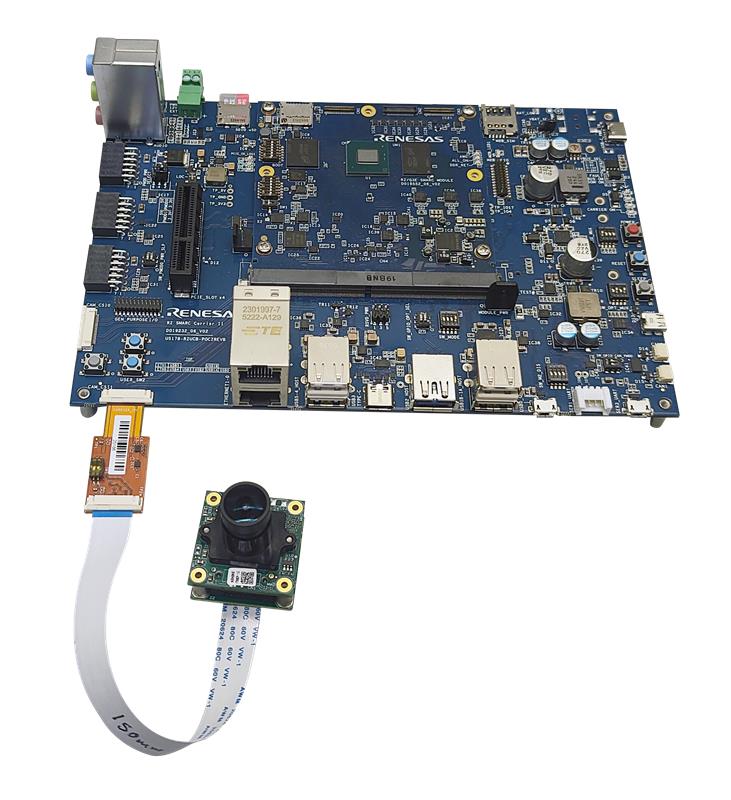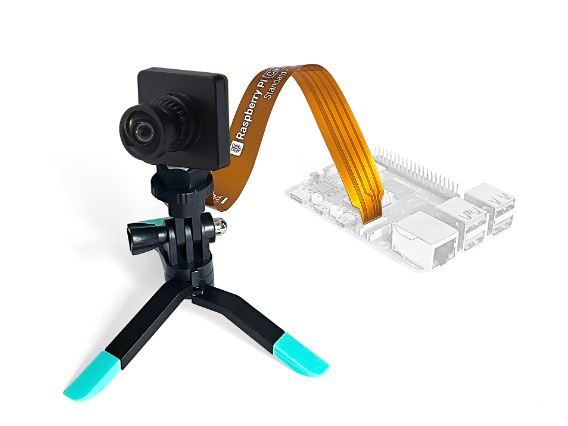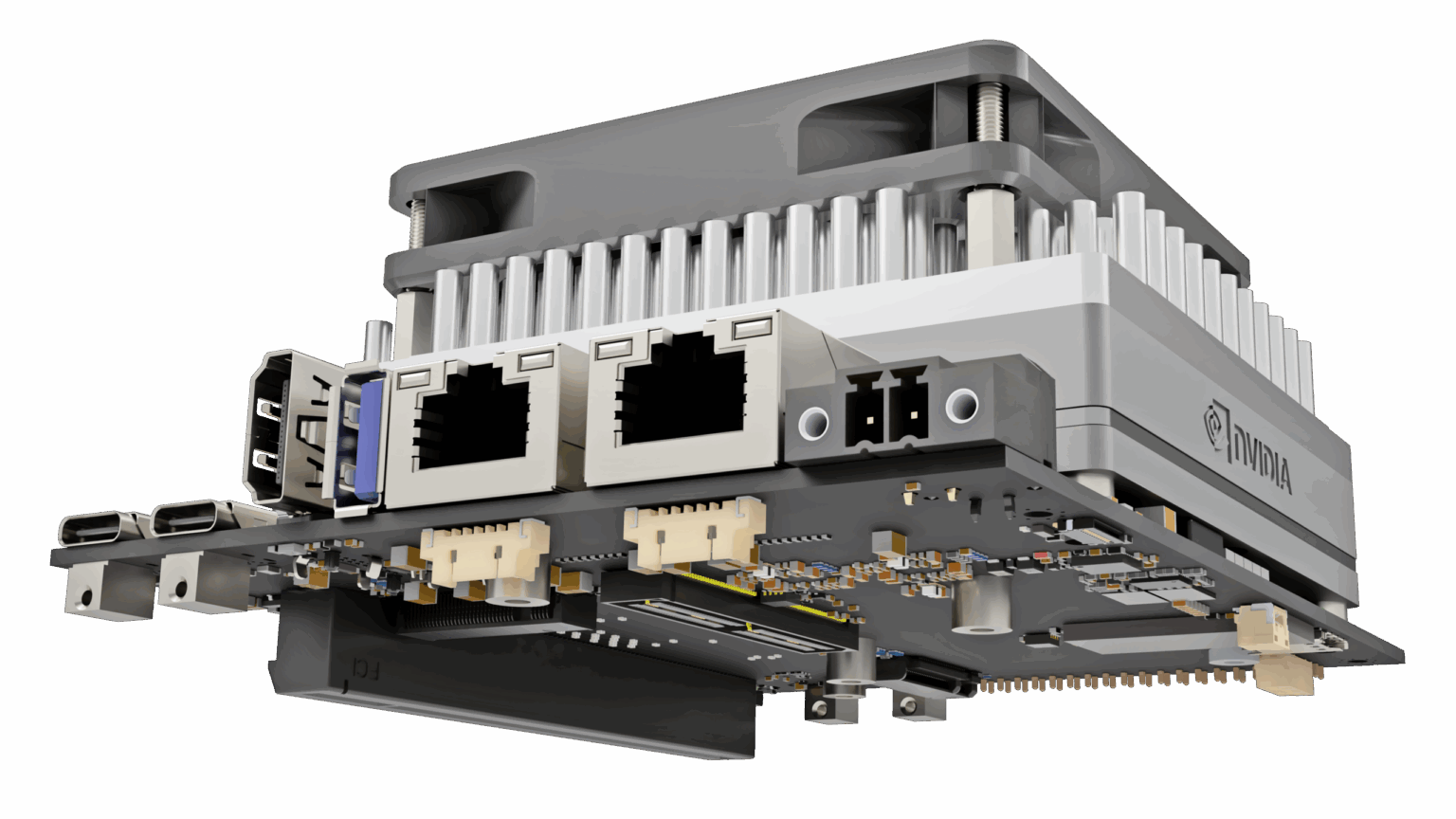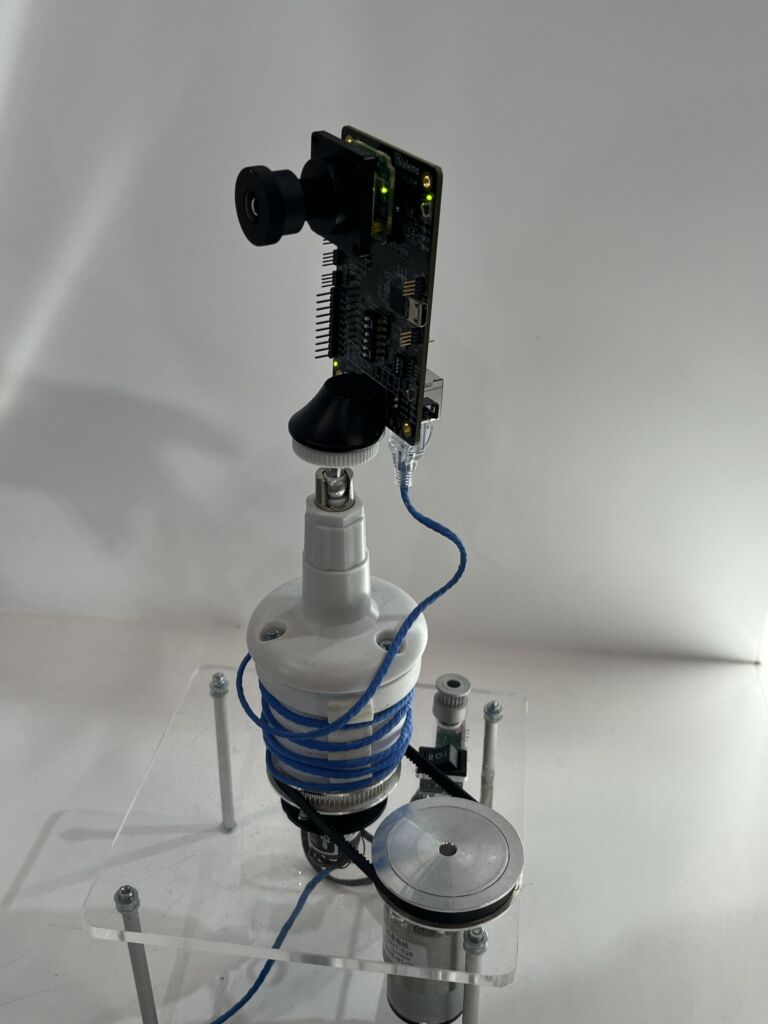
With the rise of AI and increased processing power of embedded platforms, embedded vision has become an attractive alternative to PC-based systems, leveraging the MIPI CSI-2 interface. However, extension solutions for this short-range interface struggle to maintain signal integrity at high speed and long cable lengths under the harsh operating conditions of machine vision.
Challenging conditions for embedded vision interfaces
Typical MIPI CSI-2 flat cables have a maximal cable length of around 30 centimeters. Extension solutions for machine vision applications must often reach more than ten meters (for a factory floor), must be resilient to extensive bending and torsion (for a robot arm, a slip ring or a drag chain), and must have high electromagnetic immunity (for an automated production line packed with machines, robots, computers and sensors). Combined, all these typical industrial requirements often cannot be fulfilled by proprietary MIPI CSI-2 extensions solutions.
MIPI A-PHY: proven automotive standard
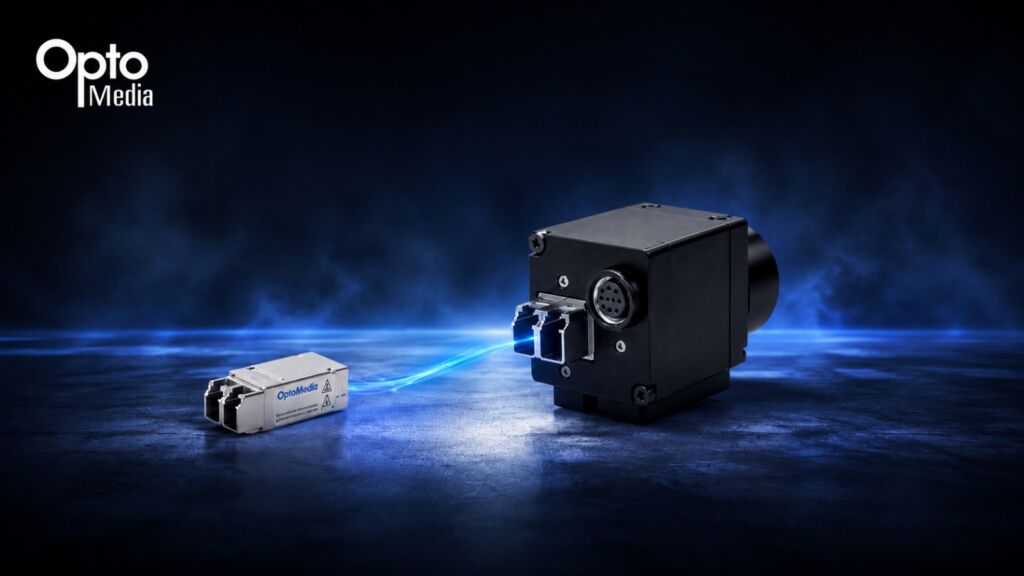
MIPI A-PHY is the official extension standard for the MIPI CSI interface. It was developed specifically for the automotive industry for safety-critical on-board assistance systems. Therefore, it fulfills high standards for signal integrity and EMC while supporting long cable lengths, which is precisely what industrial applications need. OptoMedias ultrakompaktes Mini SFF bringt zuverlässige, schnelle Glasfaserverbindungen in Industriekameras der nächsten Generation. ‣ weiterlesen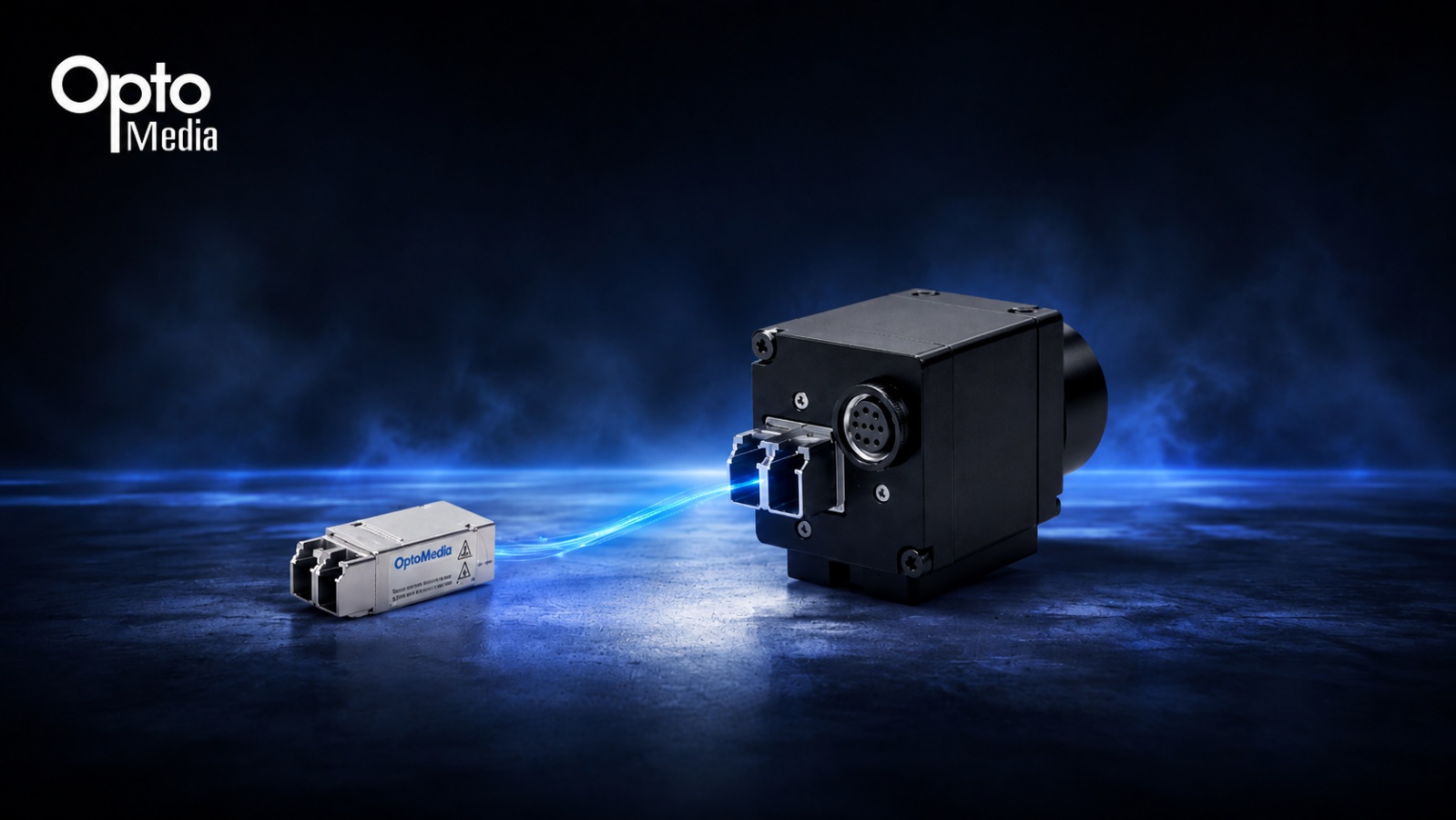
Fiber Mini SFF für GigE Vision
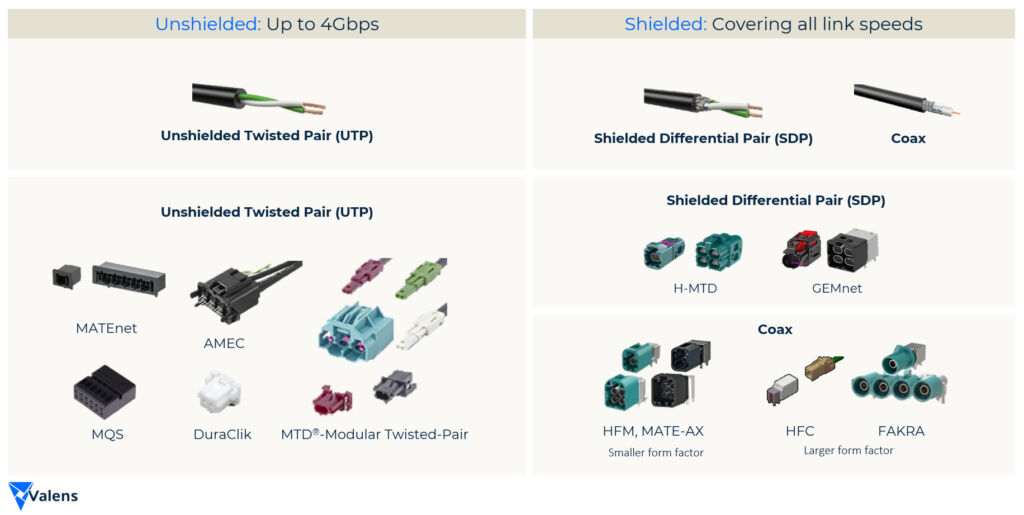
MIPI A-PHY has by far the best electromagnetic compatibility (EMC) compared to existing machine vision interface standards, with a Bit Error Ratio (BER) of 10-23. Another benefit of the A-PHY standard is its built-in signal integrity diagnostics. This secures the integrity of the signal and allows predictive maintenance. The standard allows reliable image data transmission for long runs and through multiple inline connectors using shielded cables. Further, due to a strong DSP that supports high levels of EMI resilience, some chipsets on the market that are based on the MIPI A-PHY standard can operate on a myriad of challenging cables and connectors: Multi Gig long reach connectivity even over, low-cost unshielded cables (UTP-Unshielded Twisted Pair) and micro-coaxial cables. Finally, the MIPI A-PHY standard supports high precision triggering and camera synchronization using pulse width modulation (PWM). This is highly beneficial for multi-camera systems in industrial applications.
In the machine vision industry, standards are important. MIPI A-PHY’s acceptance as a standard across the automotive industry is the best proof of its reliability and interoperability as well as its long-term availability as an interface standard from multiple vendors.
Interface solution for a variety of industrial applications
There are many benefits the technology introduces; let’s examine how they can be applied to specific industrial applications: